

You have probably opened a campaign report, seen a big earned media value figure at the top, and wondered how much to trust it. EMV is an estimate of what you would have paid in advertising to earn the same exposure a creator, post or piece of coverage brought you without a media buy.
That one number shapes a lot of decisions, so it is worth knowing how it is built and where it quietly falls apart. Here is how EMV is calculated, and what to check before you lean on it.
What earned media value actually measures
Start with where it sits. Paid media is the space you buy, owned media is the channels you control, and earned media is the attention you get without paying for it directly. EMV puts a price on that third bucket, so the exposure you win through creators, fans and coverage can line up next to your paid spend.
Because it turns attention into a euro figure, EMV has become the go-to way to talk about value in a market that keeps expanding. Global spend on influencer marketing alone passed €30 billion in 2025, and everyone writing those cheques wants to know what they bought.
Keep one word in mind: estimate. EMV models value, it does not record money that changed hands. As a rough guide it does its job. As a hard figure it can lead you astray, and you can see why the moment you look at the formula.
If you want the broader picture first, our guide on understanding media value covers how sponsorship exposure is valued and where EMV fits within it.
The EMV formula, with a worked example
Most EMV calculations follow the same shape. You give each engagement a value, give every thousand impressions a value, and add the two together.
Say a creator post pulls 500,000 impressions and 25,000 engagements. Put €0.10 on each engagement and €8 on every thousand impressions, and it works out like this: 25,000 × €0.10 is €2,500, then 500 × €8 is €4,000. Add them up and the post is worth about €6,500.
Precise, right? Not quite. Every input is a choice, and nudging those choices moves the result more than you might expect. Here is the same post valued with three sets of assumptions, all of them reasonable.
One post, three defensible methods, and a result that swings from €3,750 to €11,000. The content did not change. Only the assumptions did.
EMV, MIV and AVE: how they differ
EMV is not the only way to price exposure, and knowing the alternatives helps explain its limits. Three metrics come up most often, and each answers a slightly different question.
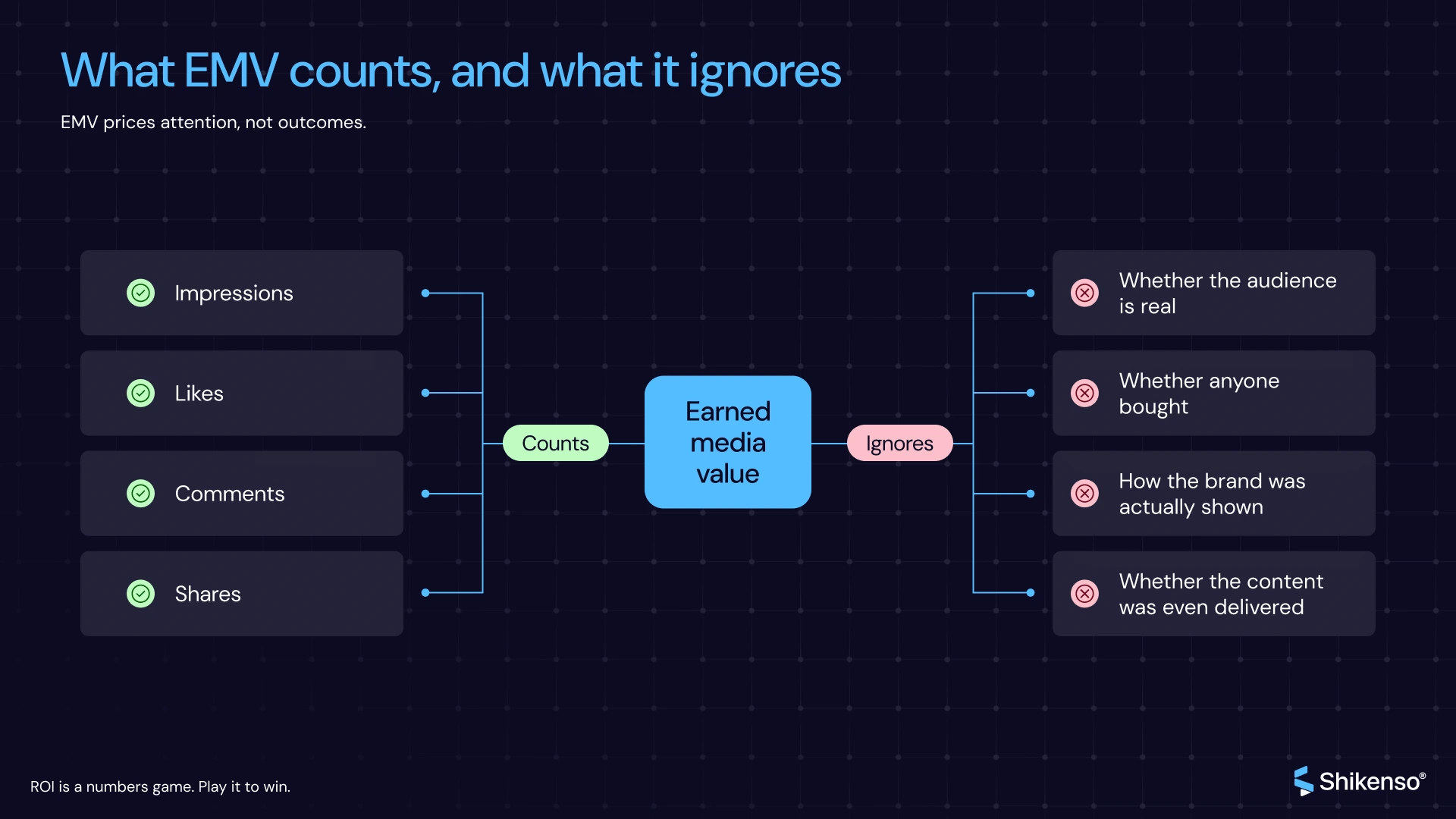
AVE is the one to be wary of. It values coverage by what the same advertising space would have cost, and the industry has moved on from it for good reason. The measurement body AMEC has rejected AVE since 2010 and held that line in its latest principles, because the price of ad space tells you nothing about whether anyone saw the coverage, understood it or acted on it.
EMV is a step up from AVE, since it weights engagement instead of raw space. But it carries the same risk underneath: a number that looks financial can still hide a shaky method.
Why two tools give you two numbers
Run the same campaign through two platforms and you will often get two EMV figures, sometimes miles apart. Two things are usually behind the gap.
The methods don't match
There is no shared value per engagement, no agreed CPM, and every platform weights the channels its own way. So EMV only holds up as a comparison when the method is fixed and spelled out, which it rarely is. Change the multipliers and you change the answer, as the earlier table showed.
The delivery often doesn't either
The bigger issue sits under the maths. Most EMV figures are built on what a creator was briefed to do, not on what actually went live. A few of the gaps that creep in:
- A post gets deleted after it has already been counted.
- The brand shows for three seconds in a Story instead of the agreed integration.
- A slice of the audience behind those impressions is inactive or fake.
Each gap inflates the exposure before a single multiplier is applied, and the value quietly inherits every one of them.
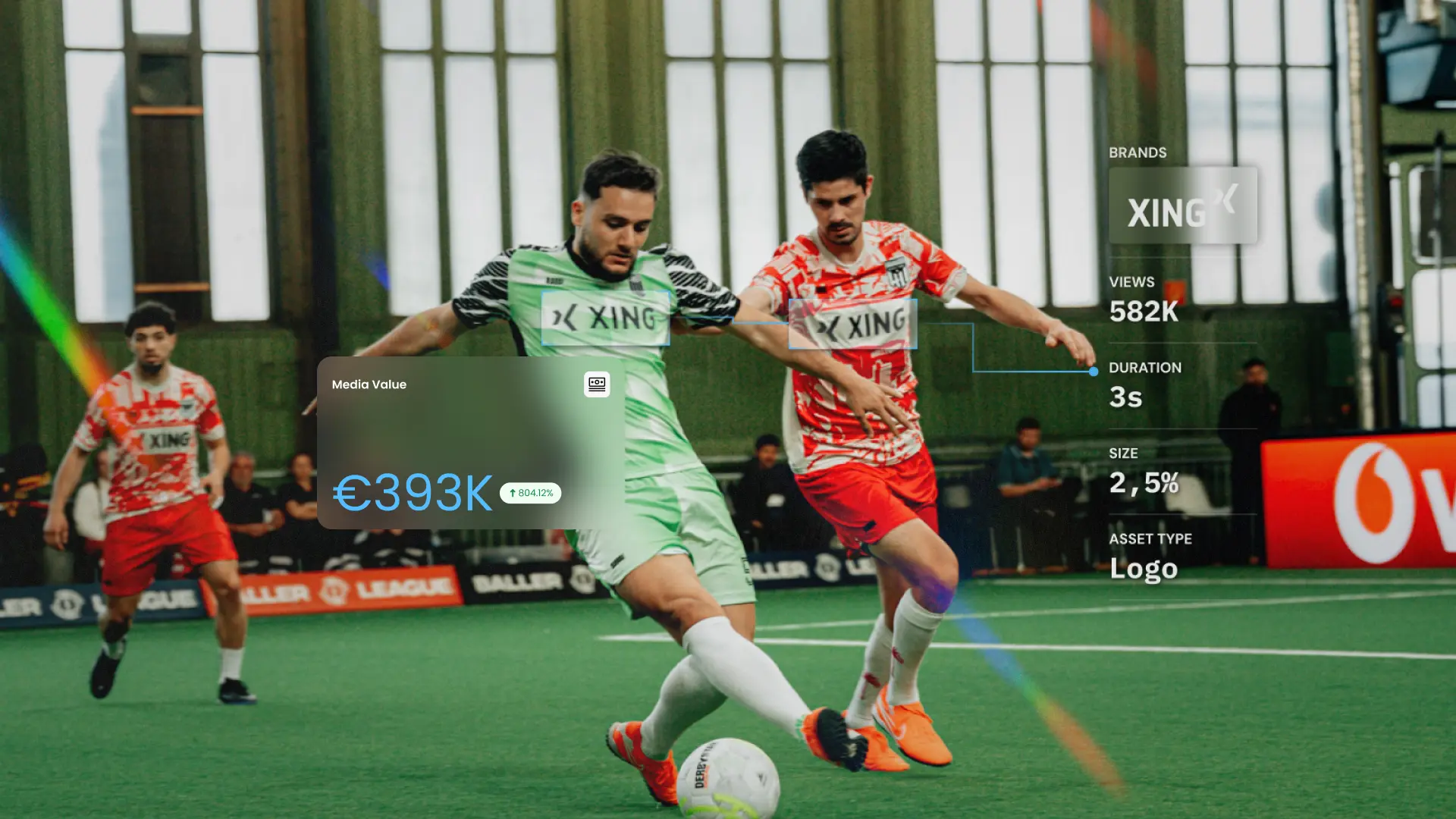
That is why verification does more for the number than the formula ever will. When exposure is confirmed against what was genuinely delivered, using visual, audio and text detection rather than a follower count, the value stands on something real.
Shikenso Campaign was built to do exactly that, tying every figure back to what actually went live.

For agencies, that verified figure is what a client wants to see at renewal, and it is where a defensible number earns its keep.
A simpler way to think about media value
None of this makes EMV useless. Shown with its assumptions on the table and its inputs verified, it is a fair way to size the exposure a campaign earned. It only misleads when one headline figure gets passed off as hard fact.
That is the idea behind the calculator below. Instead of handing you one confident-looking number, it shows the assumptions it is using and lets you watch the value shift as they change, so the estimate stays honest about what it is.
Enter your own reach and rates, and the method becomes as easy to see as the result. That is what keeps a number defensible: not the size of it, but knowing how it was built and that the delivery behind it holds up.
That is the bar we hold across measurement for brands and their partners, turning estimates into figures you can stand behind. See what that looks like on your own campaigns.

Related reads





Get new insights straight to your inbox
Don’t miss out on the insights that the press and media rave about!