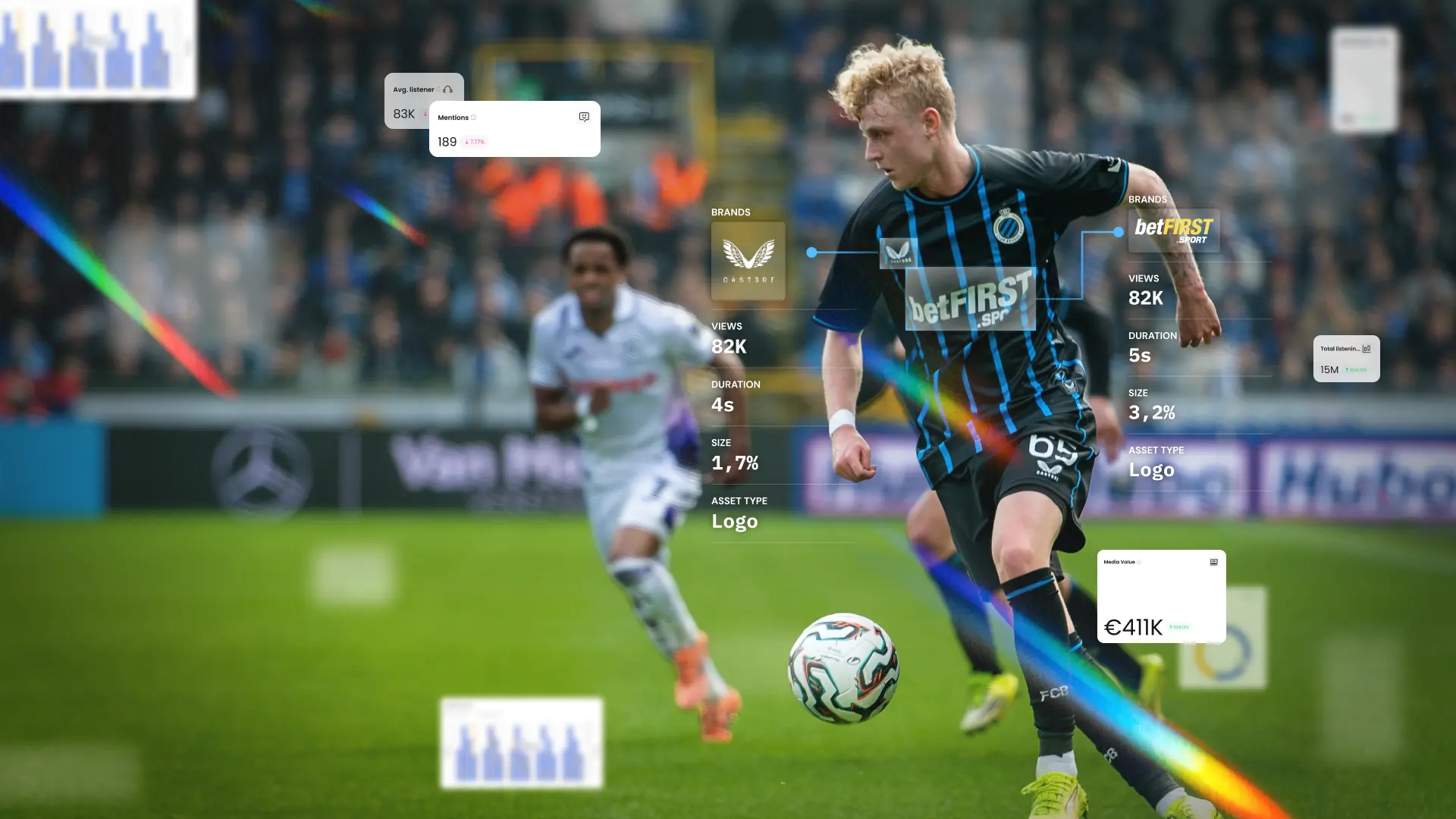

When did you last confidently tell your CFO what your brand investment delivered? When a campaign ends, can you show whether the brand got stronger, or just more visible? If your measurement programme disappeared tomorrow, would your strategy change?
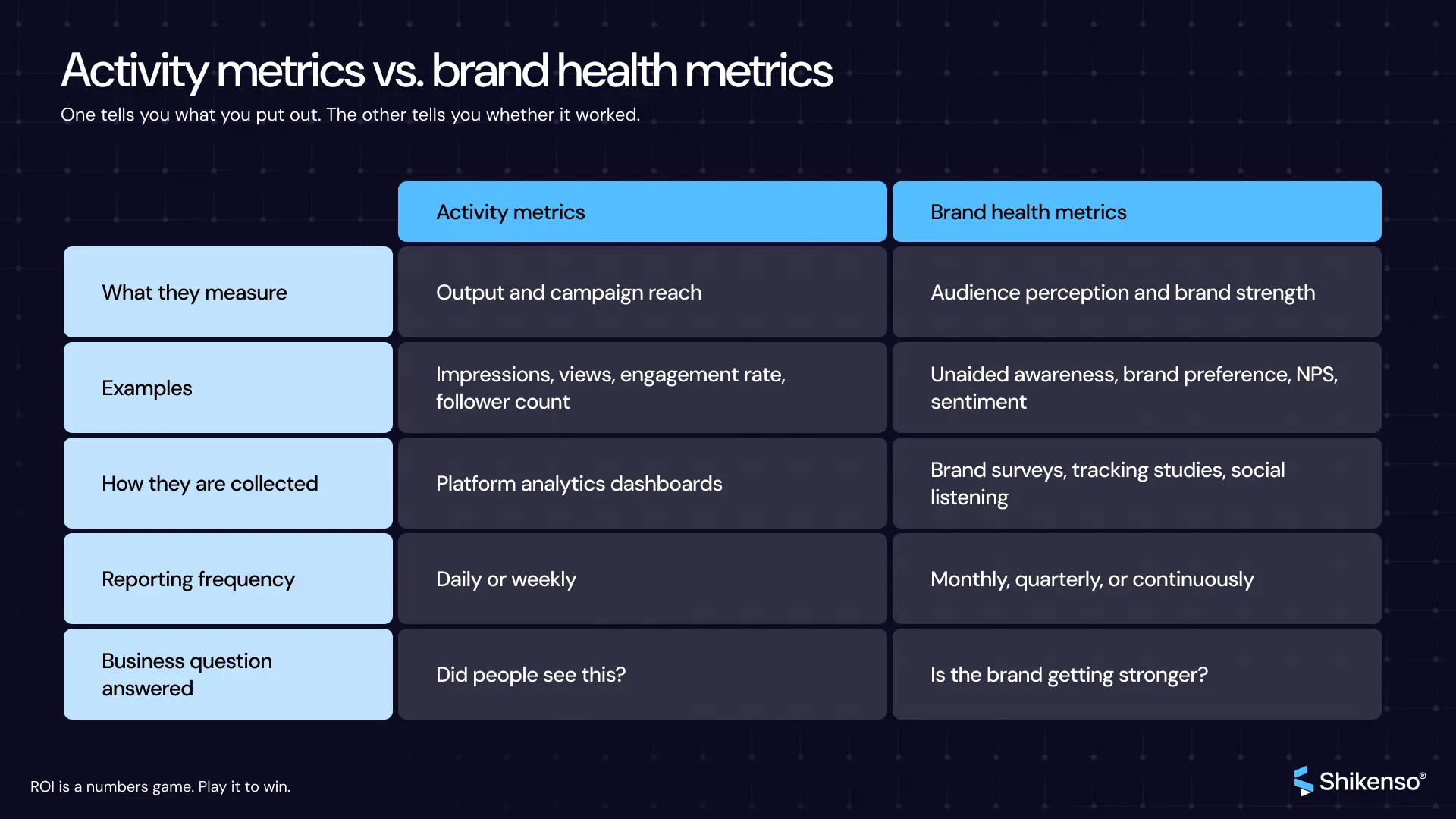
Brand value does not show up in next week's report. It compounds slowly and only becomes visible in business outcomes months or years after the investment was made. That time lag is what makes brand measurement so easy to get wrong. Most teams reach for metrics that are fast and easy to pull: impressions, engagement rates, follower growth. These are largely disconnected from the business outcomes brand investment is supposed to drive.
The result is a measurement programme that tracks activity rather than impact. This guide covers what to measure instead.
Why Brand Measurement Defaults to the Wrong Metrics
Campaign tools are built to report fast. Dashboards update daily. Leadership expects numbers on a weekly cycle. In that environment, brand teams reach for metrics that are immediate and abundant: social impressions, video views, click-through rates, follower counts.
These metrics tell you whether content reached people and whether anyone engaged. They cannot tell you whether that activity moved brand perception, strengthened preference, or contributed to a purchase decision made six months later. Reach and brand impact are different measures, and treating one as a proxy for the other is where most measurement programmes fall short.
When no one has defined what good brand performance looks like, any upward-moving number fills the gap.
The Metrics That Actually Reflect Brand Health
Brand health metrics measure how your brand lives in the minds of the people you are trying to reach. They require survey and research work rather than a dashboard export, but produce a picture of brand strength that campaign analytics alone cannot.
Brand Awareness
Unaided awareness (whether someone recalls your brand without a prompt) is a stronger signal than aided awareness, which tests recognition when the name is shown. For most brands, unaided awareness in the target segment matters most at the top of the funnel.
Brand Preference and Consideration
Preference measures whether, given a choice, customers would choose your brand. Consideration tracks whether your brand enters the decision at all. Both are leading indicators of commercial performance that awareness data cannot capture.
Brand Perception
Perception captures the attributes audiences associate with your brand, how positive those are, and how they compare to competitors. Consistent tracking reveals whether your positioning is landing or drifting.
Net Promoter Score (NPS)
NPS measures customer loyalty through a single question: how likely are customers to recommend you. A consistently high score reflects brand trust that has compounded into genuine advocacy and lower acquisition costs.
Brand Equity: The Long-Term Signal
Brand equity is the commercial value created by brand perception. It allows one brand to charge a premium over a functionally identical competitor, retain customers through market disruption, and recover faster after a setback.
For brands investing in sponsorship and media exposure, brand equity is the asset built by every activation. A sustained programme of consistent, relevant brand presence moves it. Brand equity accumulates and erodes slowly, which is why under-investing in its measurement is easy to justify short-term and expensive to correct later.
Brand equity tracking covers the components that constitute equity: awareness, preference, perceived quality, brand associations, and loyalty. Changes in any of these are early warning signals, and the earlier they are caught, the cheaper they are to address.
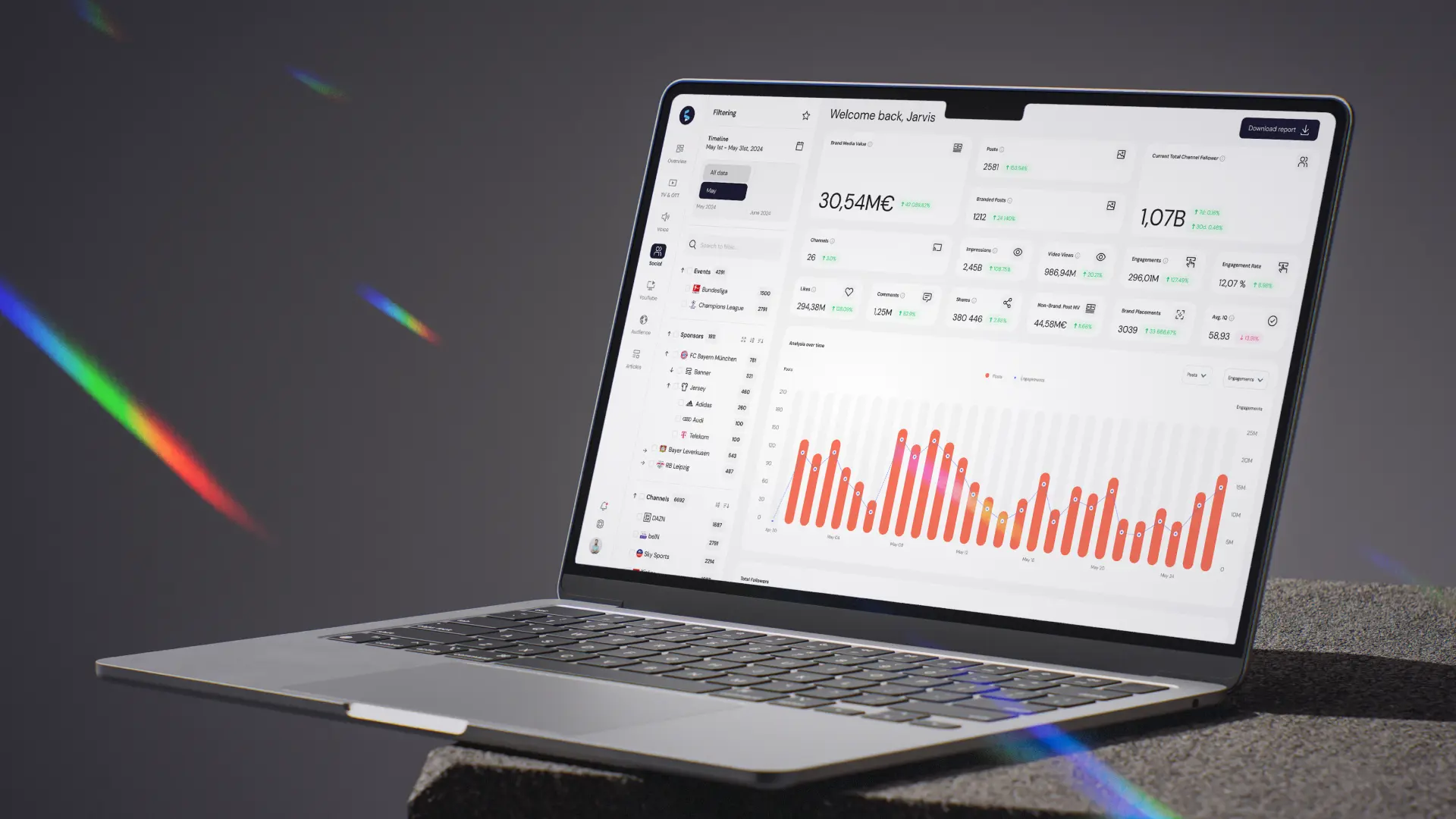
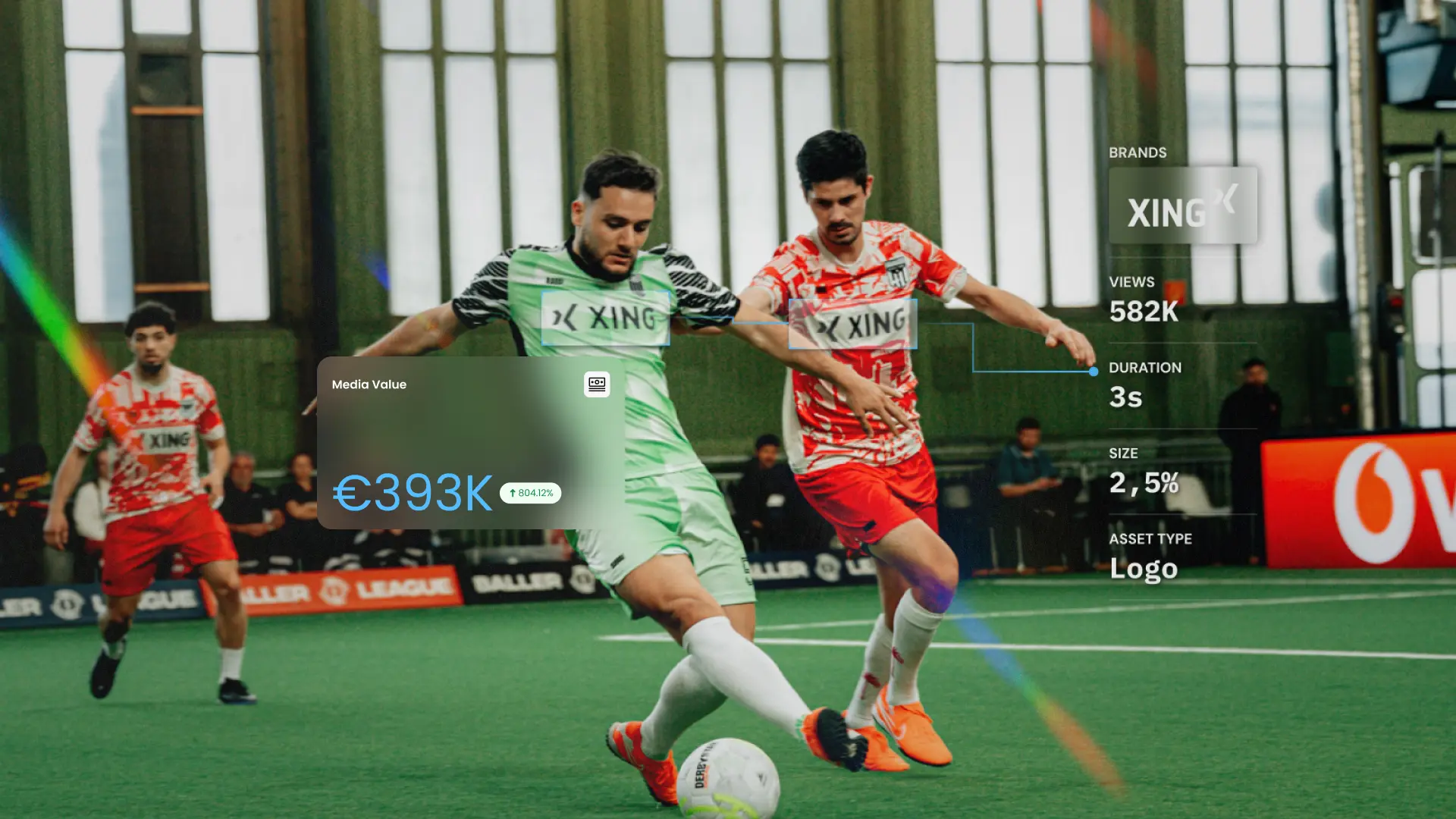
Shikenso tracks media value, audience data, and brand sentiment across sports and esports partnerships, giving brands visibility into brand equity as it builds.
How to Build a Brand Tracking Framework
A brand tracking framework defines which metrics you measure, how often, and against what baseline. Without one, brand data accumulates without context. Pair quantitative signals (survey scores, NPS trends) with qualitative ones (social listening, sentiment analysis) to build a programme that informs strategy rather than just records it.
Start with Objectives
Brand awareness, preference, consideration, and perception require different research approaches and answer different questions. Define which matters most for the current phase, then build measurement around it.
Set a Baseline Before You Run Campaigns
Pre-campaign measurement makes post-campaign evaluation meaningful. Without it, you cannot isolate the effect of brand activity from market shifts that would have happened regardless.
Track Continuously Where Possible
Brand health changes slowly but can shift sharply after a significant event or competitor move. Continuous tracking catches these shifts early. Quarterly check-ins often catch them too late.
Connecting Brand Measurement to Business Outcomes
The final step is connecting brand metrics to the numbers finance and leadership track: revenue, market share, customer lifetime value, and pricing power.
Brand awareness does not cause sales the way a promotional email does. But brand metrics are leading indicators of commercial performance. Rising brand preference precedes market share growth. Improving NPS precedes lower churn and higher referral rates. Strengthening perception precedes pricing resilience under competitive pressure.
For sports and esports rights holders presenting brand data to sponsors, this is where the commercial argument gets made. Sponsors renew because awareness, preference, and sentiment data can be linked to outcomes their business tracks: customer acquisition, pricing resilience, and long-term loyalty.
Measurement That Earns Its Place at the Table
The brands making better investment decisions on the back of brand data share one thing: they built their measurement programmes around business outcomes.
Brand health metrics compound in value the longer you track them. A single data point tells you where you are. Twelve months of consistent tracking tells you where you are heading. That is the difference between a measurement programme that justifies spend and one that shapes strategy.
Shikenso gives brands and rights holders the audience data, media value tracking, and sentiment analysis to connect sponsorship investment to brand health and business outcomes. Book a demo to see what your current partnerships are delivering.

Related reads


Get new insights straight to your inbox
Don’t miss out on the insights that the press and media rave about!