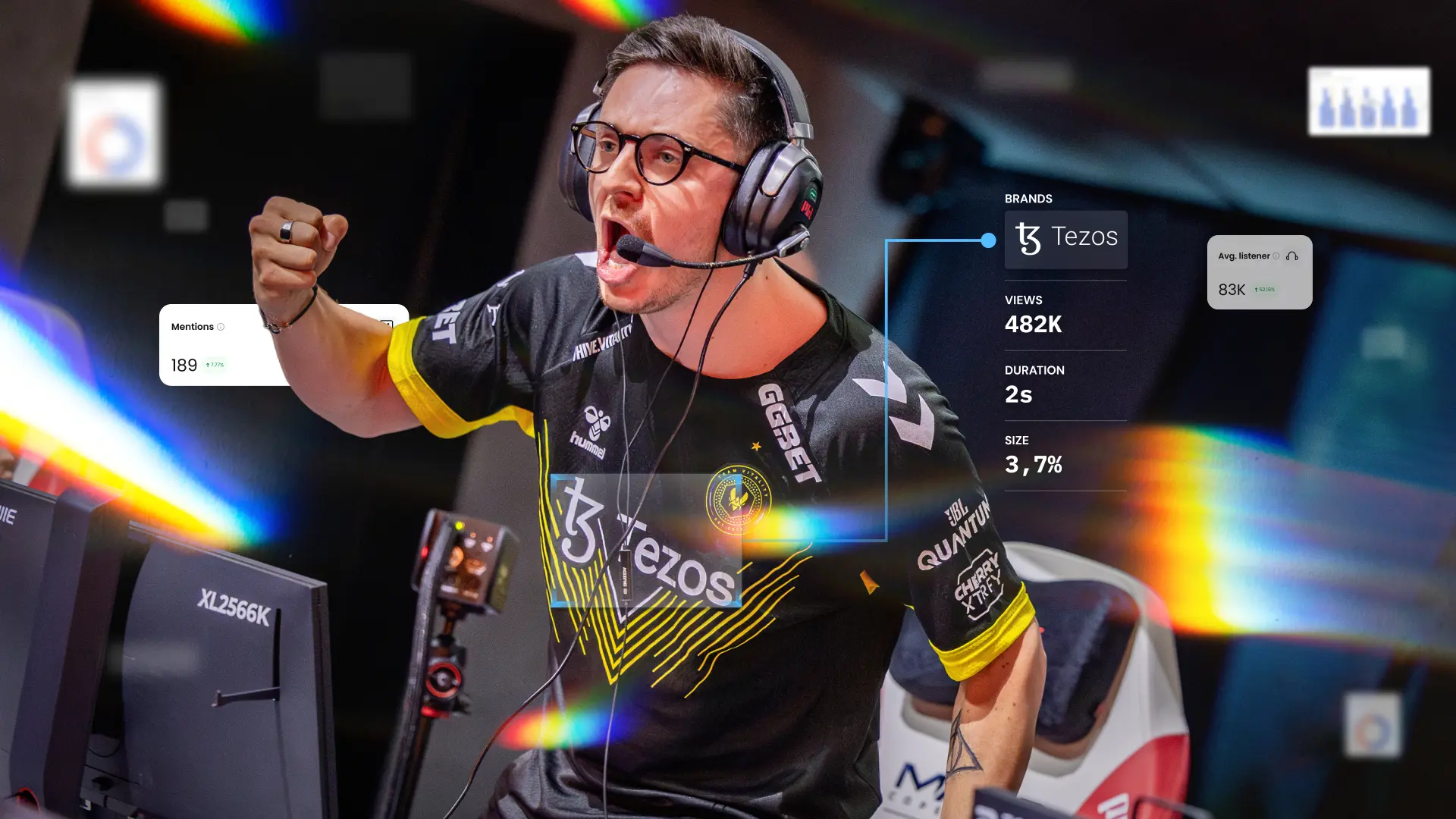

Updated August 2026 · Whether you're sponsoring a Premier League football club, an esports tournament, a music festival, or a corporate conference, the challenge remains identical: prove ROI or lose the budget.
Brand managers know the pressure. The board demands proof that sponsorship investments deliver real business value. Marketing teams present impressive reach figures and brand awareness metrics. Meanwhile, finance wants concrete numbers that justify the mounting costs.
The uncomfortable truth? Brands are still struggling to demonstrate clear ROI from their sponsorship investments. With the European sponsorship market valued at €30.9 billion according to ESA, this measurement gap represents billions in potentially wasted investment.
The solution lies in systematic sponsorship ROI calculation that transforms vague promises into quantifiable business outcomes.
When Measurement Goes Wrong
Here's what happens when brands fail to measure sponsorship ROI properly. Marketing investments become guesswork rather than strategic decisions. Successful partnerships go unrecognised whilst underperforming deals receive renewed funding.
The measurement challenge extends beyond basic reach calculations. Traditional approaches count logo appearances and estimate media value equivalencies. However, these metrics fail to connect sponsorship exposure to actual business results.
The New Reality
Modern sponsors demand accountability. Brands typically expect 2:1 to 4:1 ROI ratios, meaning brands must demonstrate that every pound invested generates two to four euros in returns.
Key Challenge: Most sponsorship professionals cannot confidently measure business value return
ROI Basics That Actually Work
Sponsorship ROI measures the total return from marketing investments against partnership costs, encompassing both tangible and intangible benefits. Unlike traditional advertising ROI, sponsorship measurement must account for multiple touchpoints and long-term brand building effects.
Key capabilities that separate sophisticated measurement:
- Asset-level differentiation - Track performance of individual sponsorship elements
- Campaign comparison - Identify which partnerships drive highest media value
- Exposure proof - Complete transparency with individual valuation for every piece of content
- Portfolio reevaluation - Data-driven decisions for future investments
The Foundation Formula
However, effective measurement requires a more sophisticated approach that captures diverse value streams:
Critical insight: Advanced measurement frameworks incorporate brand awareness improvements, customer lifetime value increases, and media exposure valuations alongside direct sales attribution.
What Actually Matters: The Big Four
Successful sponsorship ROI calculation tracks multiple performance indicators across four critical dimensions.
1. Brand Awareness & Reach
Media value calculations establish baseline sponsorship worth through equivalent advertising costs. However, smart brands dig deeper to measure awareness lift within target demographics.
- Track how exposure translates to brand recognition
- Measure reach quality, not just quantity
- Monitor competitive share of voice
2. Customer Acquisition & Conversion Rates
Lead generation tracking connects sponsorship touchpoints to sales pipeline growth. Conversion rates reveal how effectively sponsorship exposure turns prospects into customers compared to other marketing channels.
3. Long-term Value Creation
Customer lifetime value calculations capture sustained revenue from sponsorship-acquired customers. Research shows customers acquired through sponsorship often demonstrate higher engagement and retention rates than those from traditional advertising.
4. Brand Preference Impact
This provides the highest-order metric due to its direct correlation with market share and price premiums. This enables straightforward financial return calculations.
Each of these dimensions breaks down into specific metrics. The table below shows what to measure, how to measure it, and what each one proves. Filter it by property type to see what applies to you.
How AI Tracking Changed Sponsorship Measurement
Artificial intelligence has moved sponsorship measurement from guesswork towards precise science. Advanced AI tracking provides the foundation that makes sophisticated ROI calculation possible.
The AI Advantage
Computer vision tracks logos and values media with far greater accuracy than manual methods. Unlike basic systems that simply count appearances, AI differentiates between assets and campaigns, revealing exactly which sponsorship elements drive the strongest returns.
Multi-Modal Intelligence
AI tracking captures the complete picture through three critical dimensions:
- Visual tracking - Frame-by-frame analysis identifies every logo appearance with precise duration, size, and placement quality metrics
- Audio analysis - Natural language processing monitors brand mentions across 200+ languages during broadcasts and fan conversations
- Sentiment analysis - Real-time evaluation reveals genuine audience connection with brand messages
This multi-modal approach works across all sponsorship types, from measuring esports tournament exposure to tracking traditional sports broadcast value.
Deep dive: For comprehensive esports-specific measurement strategies, see our complete guide to esports sponsorship ROI.
Optimisation During the Event
AI delivers insights during events rather than weeks afterward, enabling tactical adjustments whilst campaigns remain active. Brands can see which assets perform strongest and adjust activation strategies while the event is still live.
The transparency advantage: Every exposure piece receives individual valuation, providing complete accountability that traditional measurement cannot match.
These measurement principles hold across every kind of property. At the M7 World Championship, the flagship Mobile Legends: Bang Bang! event, the same approach proved sponsorship value at scale, with more than €158M in tracked media value. Your partnerships deserve the same clarity.

Your ROI Calculation Playbook
Professional sponsorship measurement requires systematic evaluation across multiple phases.
Phase 1: Document Everything
Calculate total costs including:
- Sponsorship fees
- Activation costs
- Staff time and travel expenses
- Opportunity costs
Phase 2: Track Revenue Sources
- Direct sales increases through promotional codes
- Dedicated landing pages performance
- Customer journey mapping
- Multi-touch attribution crediting
Phase 3: Measure Brand Impact
Conduct pre and post-campaign brand awareness studies using matched sampling methodologies. Compare exposed versus non-exposed audience segments to isolate sponsorship impact.
Phase 4: Calculate Long-term Value
Monitor brand preference changes within target demographics over extended periods. Calculate customer lifetime value for sponsorship-acquired customers.
The whole framework fits into a single view. Use the diagram below to see what to track and the order to work through it, then tap any card for the detail.
Making It Work Internally
For Finance Teams
Present straightforward ROI data that connects sponsorship investments to business outcomes. Combine hard sales data with softer brand metrics to tell complete value stories.
For Marketing Stakeholders
Provide actionable insights for optimising future campaigns. Detailed performance breakdowns by sponsorship element help identify which activations deliver strongest returns. Media value adds crucial context for strategic decision-making.
Media value demonstrates exactly what equivalent exposure would cost across TV, social media, and other channels. This creates a straightforward benchmark:
For Executive Reporting
Focus on strategic impact and competitive positioning. Demonstrate how sponsorship measurement capabilities provide market advantages over competitors who rely on guesswork.
Your Next Move
The gap in sponsorship measurement decides who leads and who follows. While others rely on hunches, data-driven brands use AI to prove impact, win stronger partnerships, and optimise every move.
Master the metrics that matter — and let real evidence steer every decision.
Frequently Asked Questions
What is ROI in sponsorship?
ROI in sponsorship is the return a brand earns against what it spent on a partnership. It weighs media value, sales lift, and brand impact against the total cost. The basic formula is (Revenue minus Investment) divided by Investment, times 100. Strong programmes track both direct sales and slower brand value.
How do you calculate sponsorship value?
Sponsorship value is the worth of the exposure and results a partnership delivers. Start with media value, the cost to buy the same exposure through advertising. Then add measurable outcomes like leads, sales, and sentiment. Track every logo, mention, and placement, and give each one a rate based on channel and audience.
What is a good sponsor ratio?
A good sponsorship ratio sits between 2:1 and 4:1. Every euro invested returns two to four euros in value. A ratio below 2:1 usually means the partnership underperforms or needs sharper activation. A higher ratio points to strong returns, but always check how the value was measured before you trust it.
How do you measure sponsorship?
You measure sponsorship by tracking exposure, engagement, and business results across a partnership. Record media value, reach, and share of voice for awareness. Track leads, conversions, and sales for direct impact. Add sentiment and brand preference for slower value. Then combine these into one ROI figure your finance team can trust.
How do you measure long-term sponsorship ROI?
Long-term sponsorship ROI captures value that builds over months and years, not only during an event. Measure the customer lifetime value of people acquired through the partnership. Track shifts in brand preference and awareness within your target market. Compare both against total investment to show how the sponsorship keeps paying back.
How do you calculate social media sponsorship ROI?
Social media sponsorship ROI weighs the value earned on social channels against your spend. Track branded posts, mentions, and reach, then give each a media value based on platform rates. Add engagement, clicks, and conversions from sponsored content. Divide the total value by your investment to see the return each channel delivered.
How do you measure esports sponsorship ROI?
Esports sponsorship ROI measures brand exposure and results across streams, broadcasts, and social clips. Track logo visibility, mentions, and placement quality across matches. Assign media value using esports audience rates, then add engagement and conversions from activations. Our complete guide to esports sponsorship ROI covers the full method.
How is an athlete endorsement deal priced?
An athlete endorsement deal is priced on the exposure and influence the athlete brings. The main factors are audience size, engagement rate, and fit with the brand. Media value from appearances, posts, and mentions adds to the figure. Track record and exclusivity push it higher. The fee should reflect the value the athlete can prove.
How do you measure event, trade-show, or B2B sponsorship ROI?
Event and B2B sponsorship ROI links booth, stage, and branding costs to pipeline results. Track the leads captured, meetings booked, and deals the event influenced. Add media value from on-site branding and coverage. Measure awareness among attendees. Compare the total against your investment to prove the event earned its place.
Related reads


Get new insights straight to your inbox
Don’t miss out on the insights that the press and media rave about!