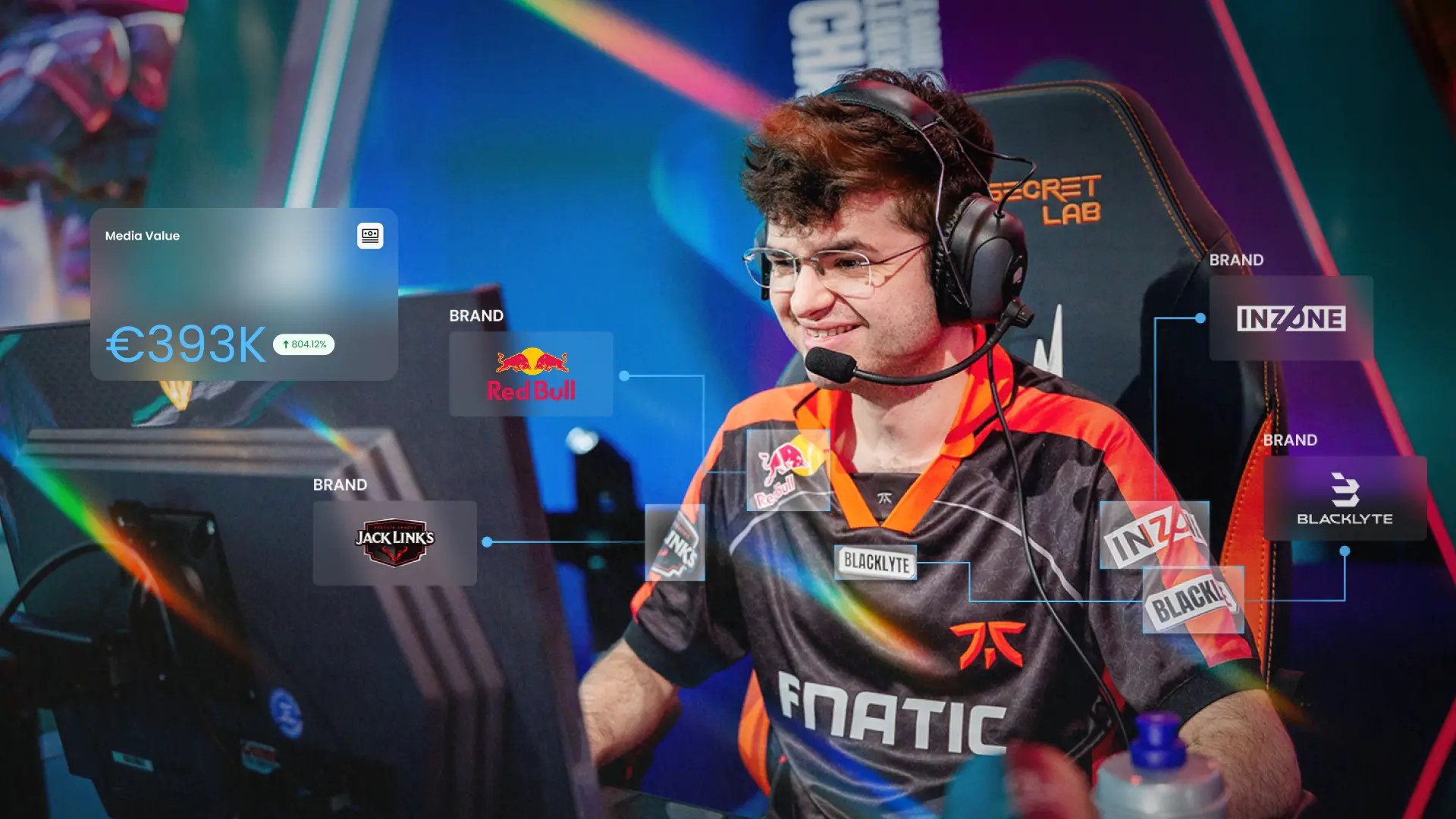

Your sponsors are getting exposure across broadcasts, streams, and social clips, on every screen they paid to be on. The hard part is proving what all of it added up to.
If you can't answer that with data, neither can your sponsors. That is where deals stop getting renewed.
And closing that gap is exactly what a sponsor tracker is built to do.
What Is a Sponsor Tracker?
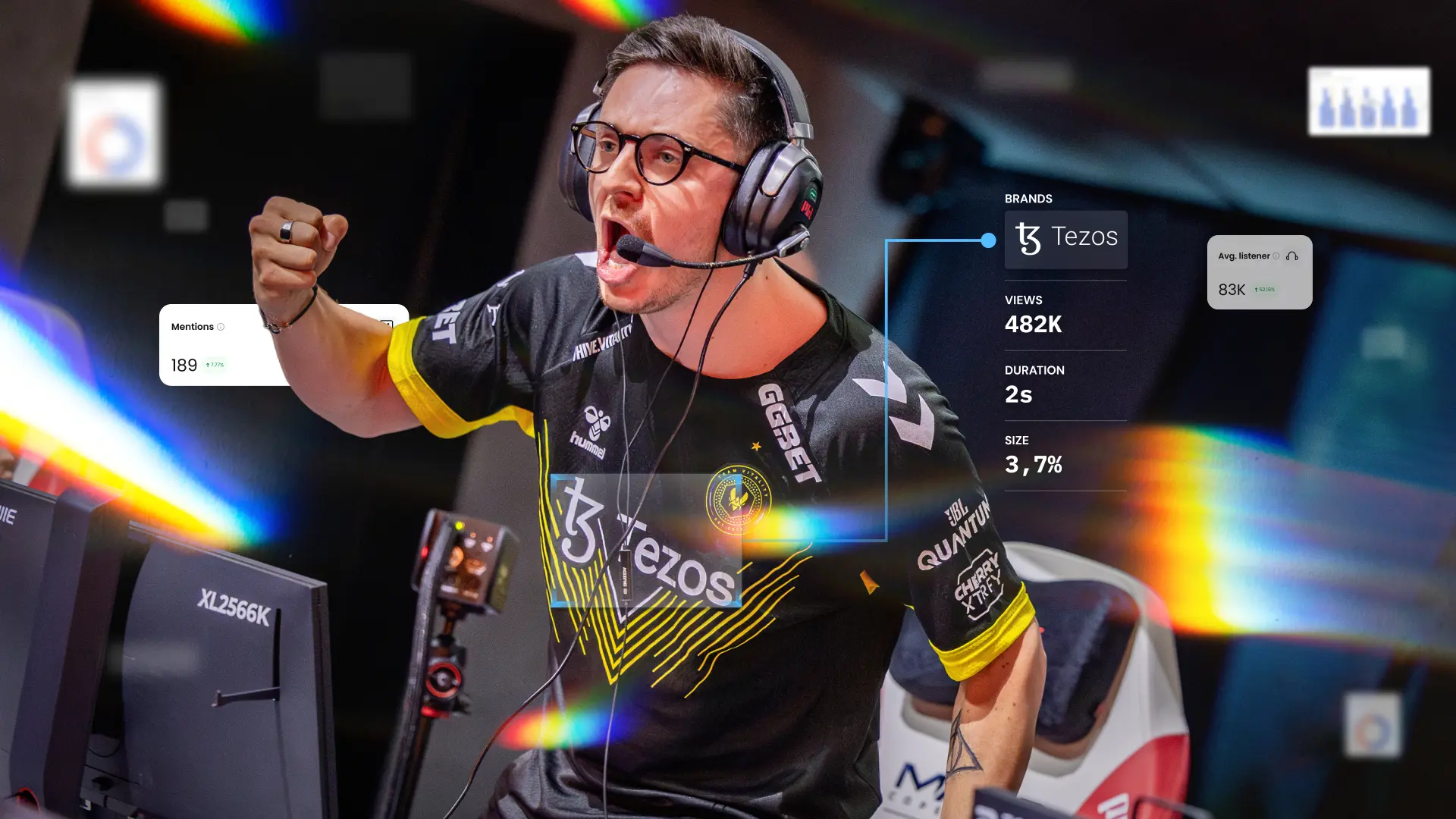
A sponsor tracker is a system that captures, measures, and reports on brand exposure across every media channel your sponsorship activates. It tells you how long a logo appeared on screen, how many people saw it, where it appeared, and what that exposure was worth, across broadcast TV, OTT platforms, social media, live streaming, and more.
A sponsor tracker is the measurement layer that turns exposure into evidence. It sits between what happens during a sponsorship and what you can prove happened, capturing and connecting every piece of brand exposure into something your partners can actually use.
At its simplest, it answers the question every sponsor is actually asking: how much exposure, where, when, and what was it worth?
How a Sponsor Tracker Works
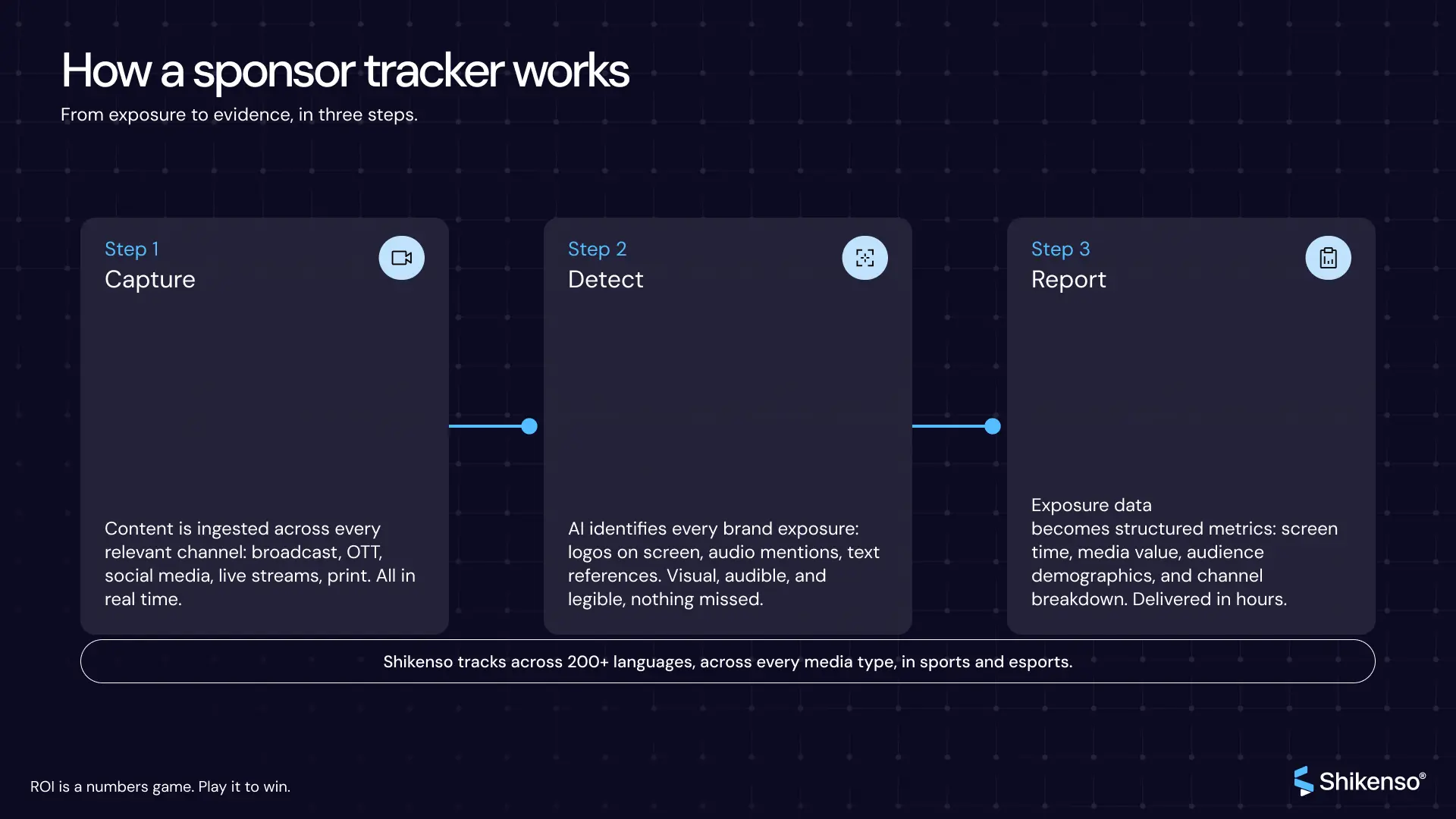
At its core, a sponsor tracker does three things in sequence:
- Capture: It ingests content across every relevant channel. Broadcast footage, social clips, OTT streams, live chat, print coverage. All of it, as it happens or shortly after.
- Detect: Using computer vision and AI, it identifies brand exposures within that content. Logos, audio mentions, text references. The capable platforms cover all three: what's visible, what's heard, and what's written.
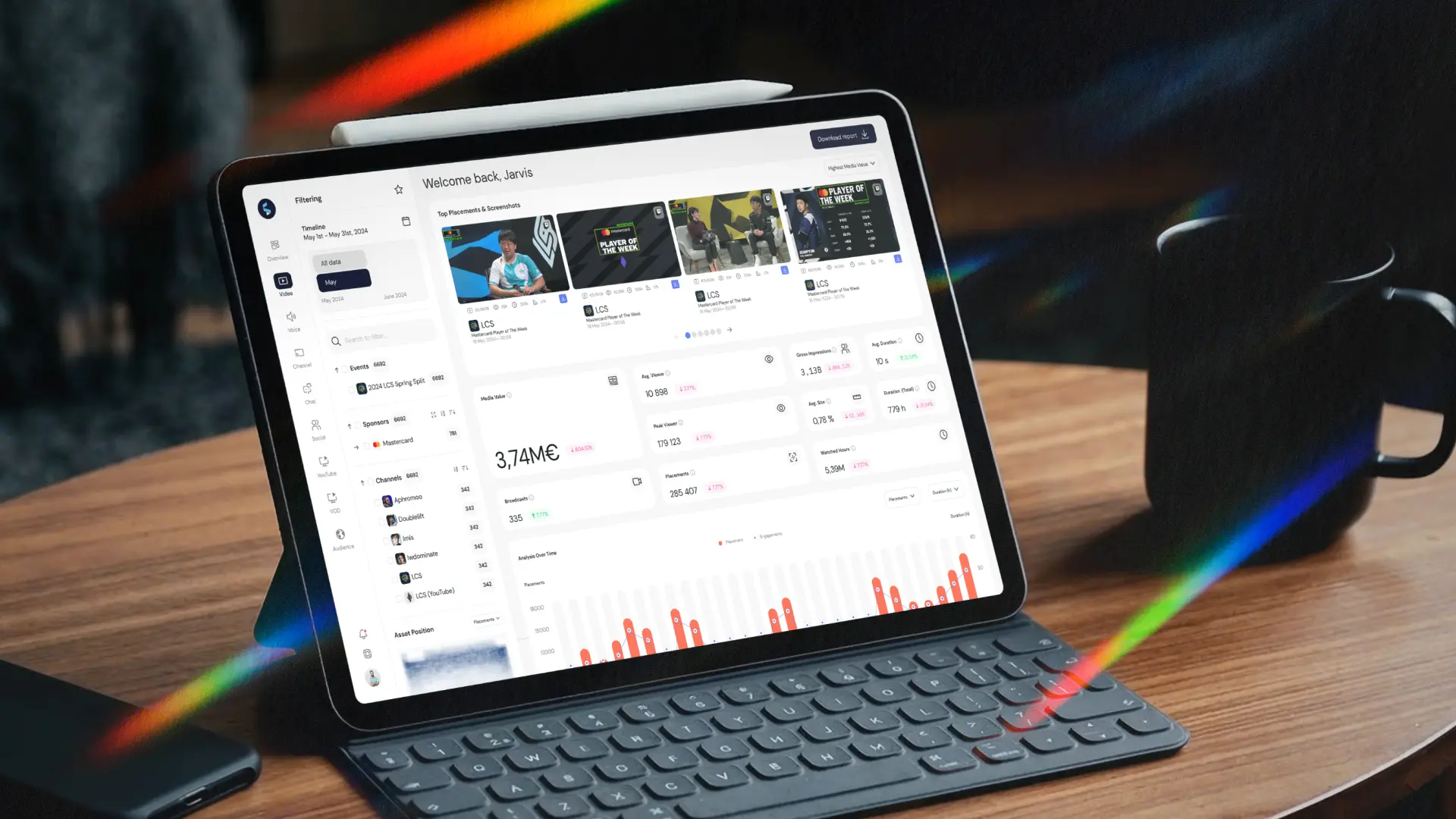
- Report: Exposure data is converted into structured metrics: screen time, media value, audience reach, engagement, and demographic breakdown. Estimates that used to be anecdotal become numbers you can stand behind.
The process runs automatically, consistently, and at a scale no human review team could sustain manually.
What a Sponsor Tracker Measures
The scope varies by platform, but comprehensive sponsor tracking should cover:
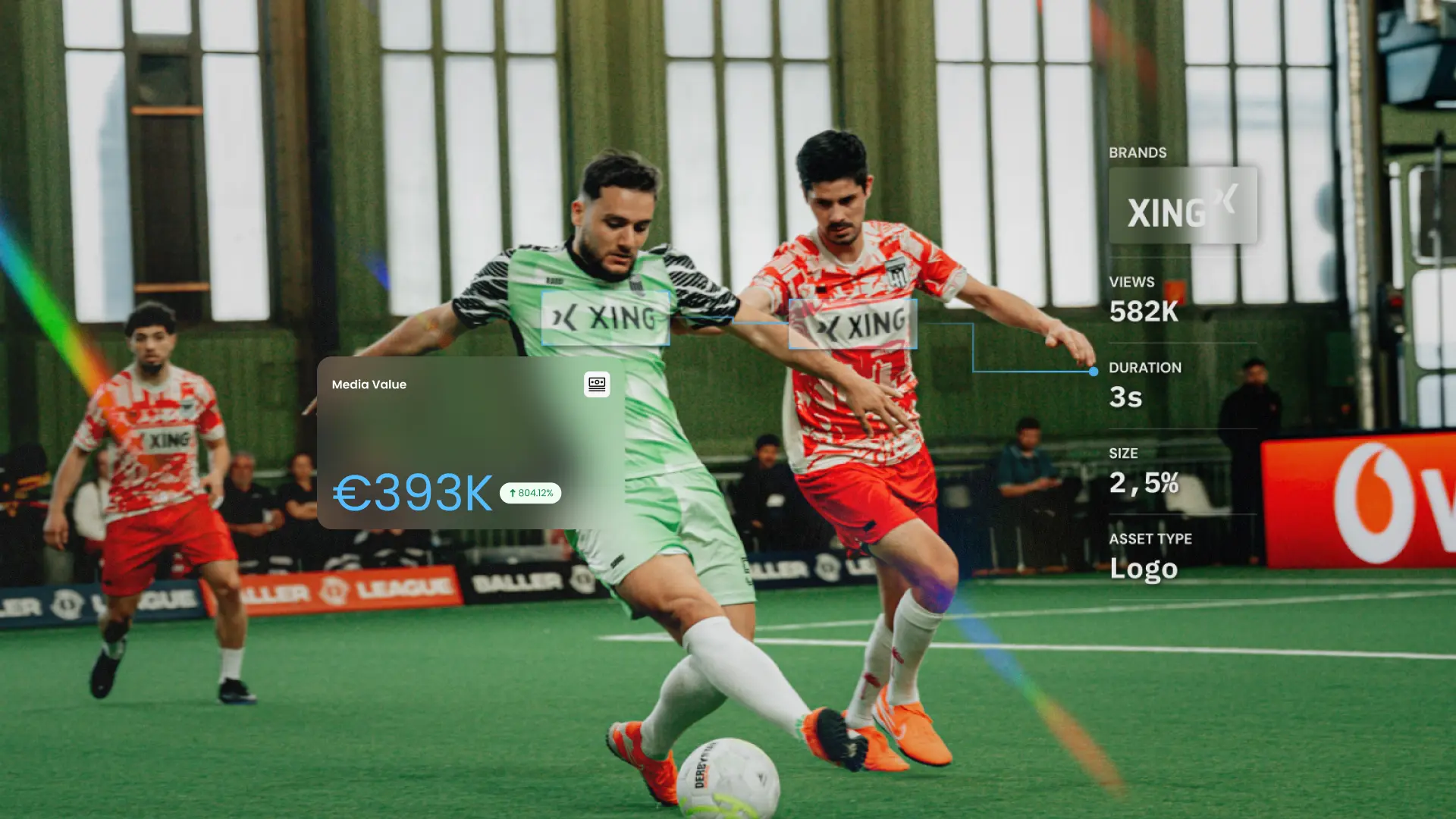
- Visual exposure: Logo appearances tracked by size, duration, on-screen position, and clarity across video and images
- Audio mentions: Brand names spoken during commentary, player interviews, post-match content, and social video
- Text and keyword tracking: Brand references in live chat, article coverage, captions, and social threads
- Media value: Every exposure carries a monetary figure based on reach, ad rates and prominence. You can estimate a single placement yourself with our media value calculator.
- Audience analytics: Who was present for each piece of exposure, broken down by geography, age, gender, and interest
The difference between a basic tracker and a capable one usually comes down to whether it covers the full stack, or only the easy part, which is typically broadcast logos alone.
Why Manual Tracking Falls Short
The traditional approach involved recording footage, reviewing it internally, and producing a report, sometimes weeks after an event. That process has three structural problems.
First, it's slow. By the time data reaches the sponsor, the window to optimise or act on it is gone. Second, it's incomplete. A team cannot realistically monitor broadcast, OTT, ten social platforms, and live chat simultaneously; exposure gets missed. Third, it's inconsistent. Different people reviewing the same footage will reach different conclusions about what counted and what didn't.
Automated tracking addresses all three. It handles the volume, the speed, and the consistency that manual methods cannot. Strategy decisions, which require human judgement, stay with the people who should be making them.
What This Looks Like for Sports Teams
For a sports eam or league, a sponsor tracker changes the commercial conversation at renewal. A partnership director who walks into that meeting with verified data, exposure hours by channel, media value per asset, audience demographics per activation, is having a different conversation than one presenting a highlights PDF.
Sponsors who can see exactly what their investment produced are significantly more likely to extend the partnership. When a sponsor is defending the budget internally, clear data makes them a stronger advocate for renewing it.
What This Looks Like for Esports Organisations
Esports has a different version of the same problem. Exposure isn't concentrated in pitch-side boards or broadcast graphics. It's distributed across Twitch streams, YouTube VODs, social media clips, in-game overlays, and player camera feeds, often simultaneously, across multiple regions and languages.
The commercial scale is real. The measurement infrastructure, for many organisations, still isn't. Just as the Mobile Legends: Bang Bang M7 World Championship proved sponsorship value at scale through cross-channel tracking, the teams that can show comprehensive coverage are the ones building and keeping serious sponsor relationships.
An esports sponsor tracker needs to follow the content wherever it lands. Every stream, every clip, every platform where a branded moment ended up.
What to Look For in a Sponsor Tracker
If you are evaluating sponsor tracking software, these are the criteria that separate a capable platform from a basic one. Use them as a checklist when you compare tools.
A sponsor tracker cannot make a weak sponsorship perform. Its job is to make strong performance visible and verifiable when it counts.
Shikenso track brand exposure across broadcast, OTT, social, and live streaming, across every channel that matters. If your team is still presenting sponsorship results without verified data behind them, that changes with one conversation.
Book a demo and see exactly what your sponsorships are worth.
FAQ
How can sports organisations measure sponsor mentions in broadcasts?
Sponsor tracking software scans broadcast footage with computer vision and audio recognition, detecting each logo appearance and spoken brand mention automatically. It logs how long each exposure lasted, how many people saw it, and what it was worth, so teams can report verified media value per sponsor rather than manual estimates.
What is sports media monitoring?
Sports media monitoring is the practice of tracking where and how a brand appears across sports content: broadcast, streaming, social, and print. Modern platforms do this automatically, capturing logos, mentions, and references, then converting them into reach and media value so rights holders can prove sponsorship performance.
What is perimeter advertising technology?
Perimeter advertising technology measures brand exposure on pitch-side boards and stadium signage during live events. Using computer vision, it detects each board, tracks how long it stayed on screen and how clearly, and assigns a media value, giving sponsors verified proof of the exposure their perimeter placements delivered. We break down how this works, and what it means for ROI, in our guide to perimeter advertising in football.
What should I look for in sponsor tracking software?
Look for multi-channel coverage across broadcast, OTT, social, and streaming, plus multi-modal detection of visual, audio, and text exposure. Strong platforms attach a media value to each exposure, break down audience demographics, comply with GDPR, and get you live within days rather than weeks.
How much does a sponsor tracker cost? (optional, commercial-intent capture)
Pricing depends on the channels, volume of content, and reporting depth you need. Most platforms price per property, competition, or activation rather than a flat fee, so the right way to size it is a quick scoping call. Book a demo and we will map it to your setup.

Related reads


Get new insights straight to your inbox
Don’t miss out on the insights that the press and media rave about!