

Every sponsorship generates audience data. Broadcast viewership demographics, social engagement patterns, event attendance profiles, streaming behaviour: it is all there. Most of it goes unused, not because brands do not care about their audiences, but because nobody has a framework for turning that data into decisions.
Audience analysis provides that framework. It brings together demographic and psychographic data from across every touchpoint to build a picture of who your sponsorship is actually reaching, and what to do about it. Without it, marketing and sponsorship teams make significant investment decisions based on assumed audience fit rather than verified audience reality.
This guide explains what audience analysis is, how it works in a sponsorship context, and how to use it to make better decisions across campaigns, partnerships, and content.
What Is Audience Analysis?
Audience analysis is the process of collecting and interpreting data about the people you are trying to reach: who they are, what they care about, and how they behave. In a marketing context, it informs everything from message framing to channel selection. In a sponsorship context, it determines whether the people attending an event, watching a broadcast, or following a team are the people your brand actually needs to connect with.
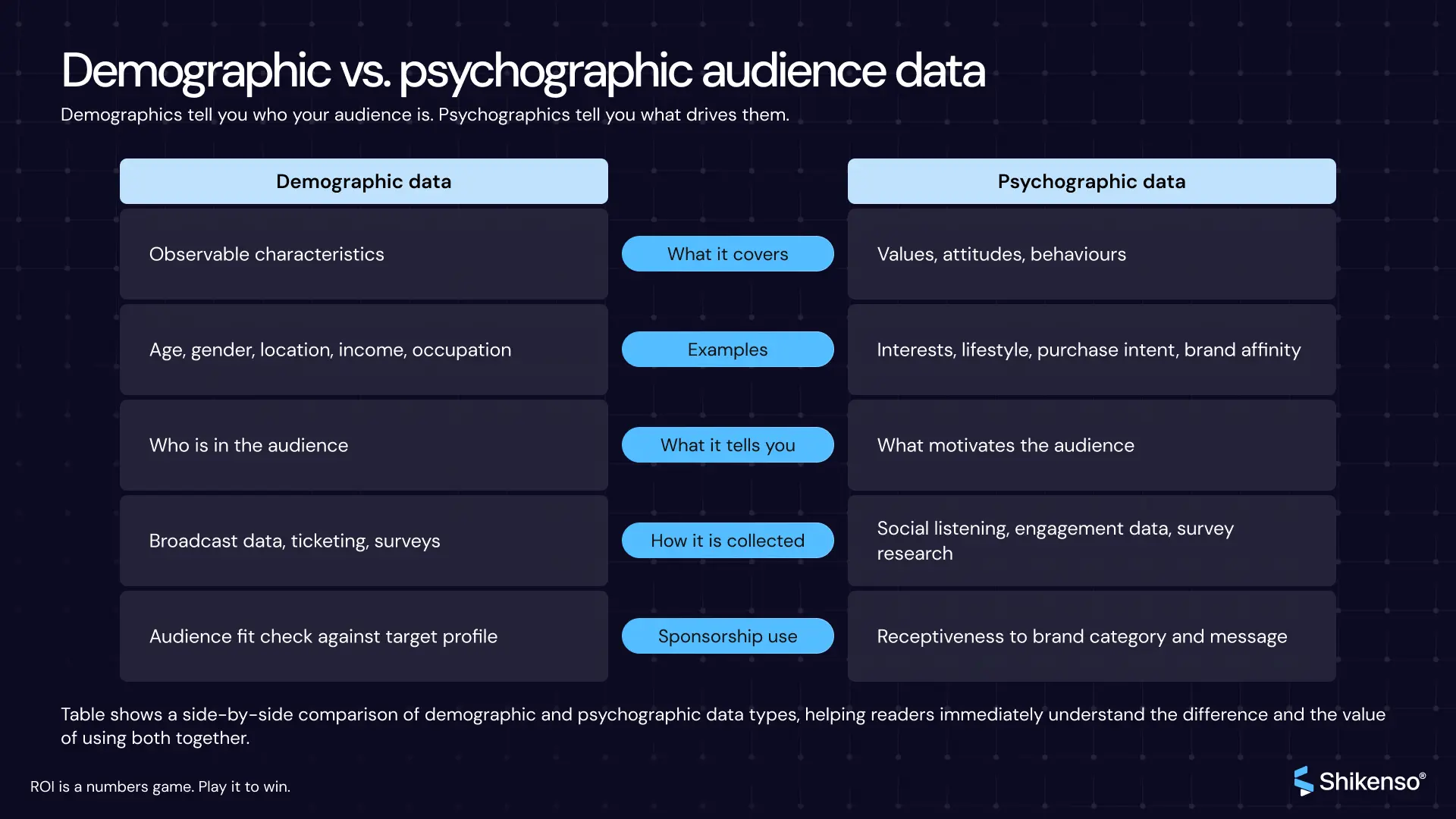
The process draws on two broad categories of data. Demographic data covers the observable characteristics of an audience: age, gender, geographic location, income level, and occupation. Psychographic data goes deeper, covering values, lifestyle preferences, attitudes, interests, and purchasing behaviour. Together, they produce a complete audience profile rather than a partial one.
That connection between audience understanding and commercial outcome is why audience analysis has moved from a research function into a core part of how sponsorship decisions get made.
Demographics vs. Psychographics: Both Matter
Demographic audience analysis is the starting point for most brands. It answers the baseline questions: how old is this audience, where do they live, what is their income level, and what is their gender split. These data points establish whether a property's fanbase overlaps with your target customer profile.
But demographics alone produce incomplete decisions. Two people with identical demographic profiles can have entirely different values, purchasing motivations, and brand preferences. Demographic data tells you who is in the room. Psychographic data tells you whether they are likely to care about what you have to say.
Psychographic audience analysis captures interests, lifestyle habits, media consumption patterns, attitudes towards brands, and purchasing intent. In sponsorship, this is particularly valuable for assessing audience receptiveness to a specific category.
A fanbase that skews toward health-conscious lifestyles is a fundamentally different commercial opportunity for a nutrition brand than one that does not, even if the demographics look the same.
Types of Audience Analysis in Sponsorship
Audience analysis in a sponsorship context takes several forms depending on where you are in the partnership lifecycle.
Pre-deal analysis
Before a contract is signed, you need to know whether the people watching, attending, or following a property are actually the people you want to reach. Pre-deal analysis compares available audience data for an event, team, or platform against your own customer profiles. It is the step that separates sponsorship decisions made on strategic fit from those made on gut feel.
Campaign analysis
Once a sponsorship is live, the question shifts from who is this audience to how are they responding. Campaign analysis tracks social media engagement, content consumption patterns, and audience sentiment across broadcast and digital channels. The goal is to understand not just how many people are seeing your brand, but who they are and whether the activation is landing.
Post-event analysis
When an activation ends, the data it generates becomes the foundation for every decision that follows. Post-event analysis combines attendance records, broadcast viewership demographics, social engagement profiles, and survey results into a full audience picture. That picture feeds directly into renewal decisions and activation adjustments for the next cycle.
Shikenso pulls audience data across all three stages into a single view, so decisions at every point in the partnership lifecycle are backed by the same evidence base.

How to Collect Audience Data
Effective audience analysis draws on multiple data sources. No single stream gives you the complete picture, and the most useful insights typically emerge from combining them.
Broadcast and streaming data
TV and OTT platforms sit at the top of the data stack for a reason. Viewership demographics provide a reliable baseline for age, gender, and geographic breakdown across a property's audience. For sports rights holders, this data is often available directly from broadcast partners.
Social media and digital engagement
What broadcast data tells you about scale, social data tells you about depth. Platform analytics reveal who is engaging with a property's content, including demographic breakdowns, interest categories, and behavioural signals. Cross-referencing this against your own customer profiles shows where the overlap is strongest.
Event attendance and ticketing data
The people who travel, buy tickets, and show up represent the most committed segment of any fanbase. Attendance and ticketing data captures geographic origin, purchasing behaviour, and event frequency, giving you a ground-level picture of the audience that broadcast numbers alone cannot provide.
Post-event surveys
Some of the most valuable audience data cannot be captured passively. Direct survey research with attendees and viewers produces the psychographic layer that demographic data alone cannot supply: brand perception, purchase intent, and sponsorship recall from the people who were actually there.
First-party CRM data
The most underused source in sponsorship audience analysis is often the data a brand already owns. Matching your existing customer profiles against a property's audience data reveals the true overlap and gives you a precise basis for deciding where to put budget.
How Audience Analysis Improves Sponsorship Decisions
Audience analysis affects sponsorship decisions at every stage: property selection, activation design, content strategy, and renewal.
At the property selection stage, it replaces assumed audience fit with verified overlap. A brand targeting urban professionals aged 25 to 40 can compare that profile against audience data for multiple properties and identify where the fit is strongest before committing budget.
During an activation, audience insights inform which content formats perform, which platforms carry the most engaged segment of the fanbase, and whether messaging is reaching the right people within a broad audience. Without this data, campaign adjustments are reactive. With it, they are targeted.
At renewal, audience data shifts the conversation from perception to evidence. Rather than defending a partnership on the basis that it felt right, teams can present a verified profile of who they reached, how that audience engaged, and how it maps against their customer base. That evidence base turns a good-feeling sponsorship into a defensible investment.
Know Your Audience, or Keep Guessing
The brands and rights holders getting the most from their sponsorships are the ones who know their audiences precisely enough to make decisions with confidence at every stage of the partnership lifecycle.
Audience analysis is how that precision is built. The data is already there across your broadcasts, your platforms, and your events. What changes when you use it properly is what you do next.
If you want to see how Shikenso turns that data into a clear audience picture for rights holders and brands, the demo is the right place to start.
Related reads



Get new insights straight to your inbox
Don’t miss out on the insights that the press and media rave about!