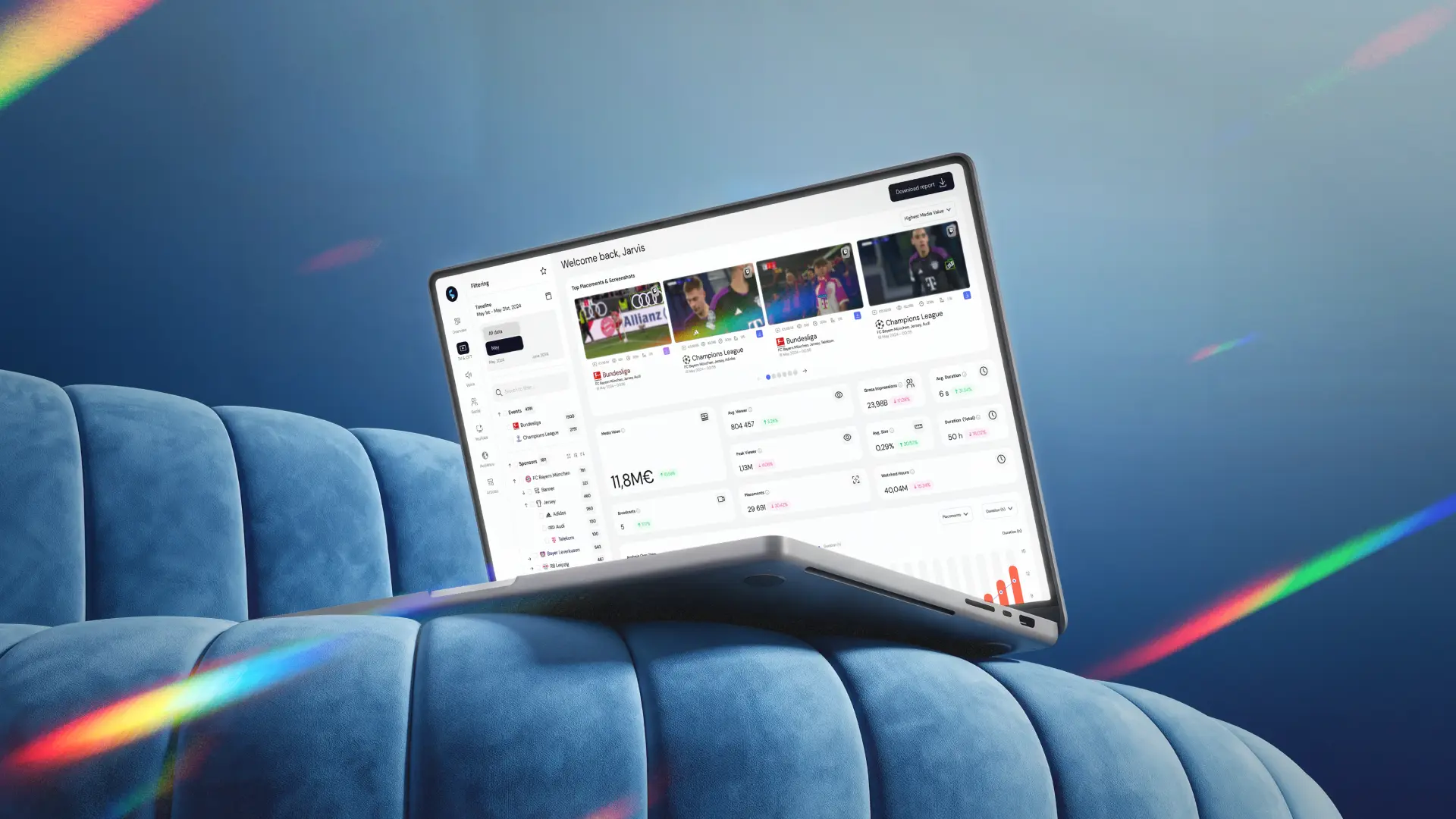

Most sponsorship programmes are not short of data. Broadcast reports, social dashboards, post-event surveys, media monitoring feeds: the numbers are there. The problem is that having more of them has not made it easier to answer the one question that matters: was this worth it?
The metrics most brands default to describe what happened, not what it delivered. Impressions tell you how many people could have seen your logo. They tell you nothing about whether anyone cared, searched, or bought.
Sponsorship KPIs fix that. The right framework connects your investment to outcomes your finance and leadership teams recognise, and changes every renewal conversation that follows. Here is how to build one.
Why Most Sponsors Are Measuring the Wrong Things
That points to a problem most sponsorship teams rarely address directly: the data exists, but it is not being used to answer the right questions.
The default approach relies on impressions and media value equivalency: how many people could have seen your brand, and what would that exposure cost to buy through advertising. These are useful baselines, but they measure reach, not impact. A logo on screen for 40 seconds tells you about exposure, nothing about whether anyone cared, searched, or acted.
Effective KPI tracking starts before the deal is signed. Define what success looks like for each partnership: brand awareness, lead generation, customer loyalty, or audience reach. The KPIs you choose should answer a specific question. If they do not, they are just data.
Brand Awareness and Visibility KPIs
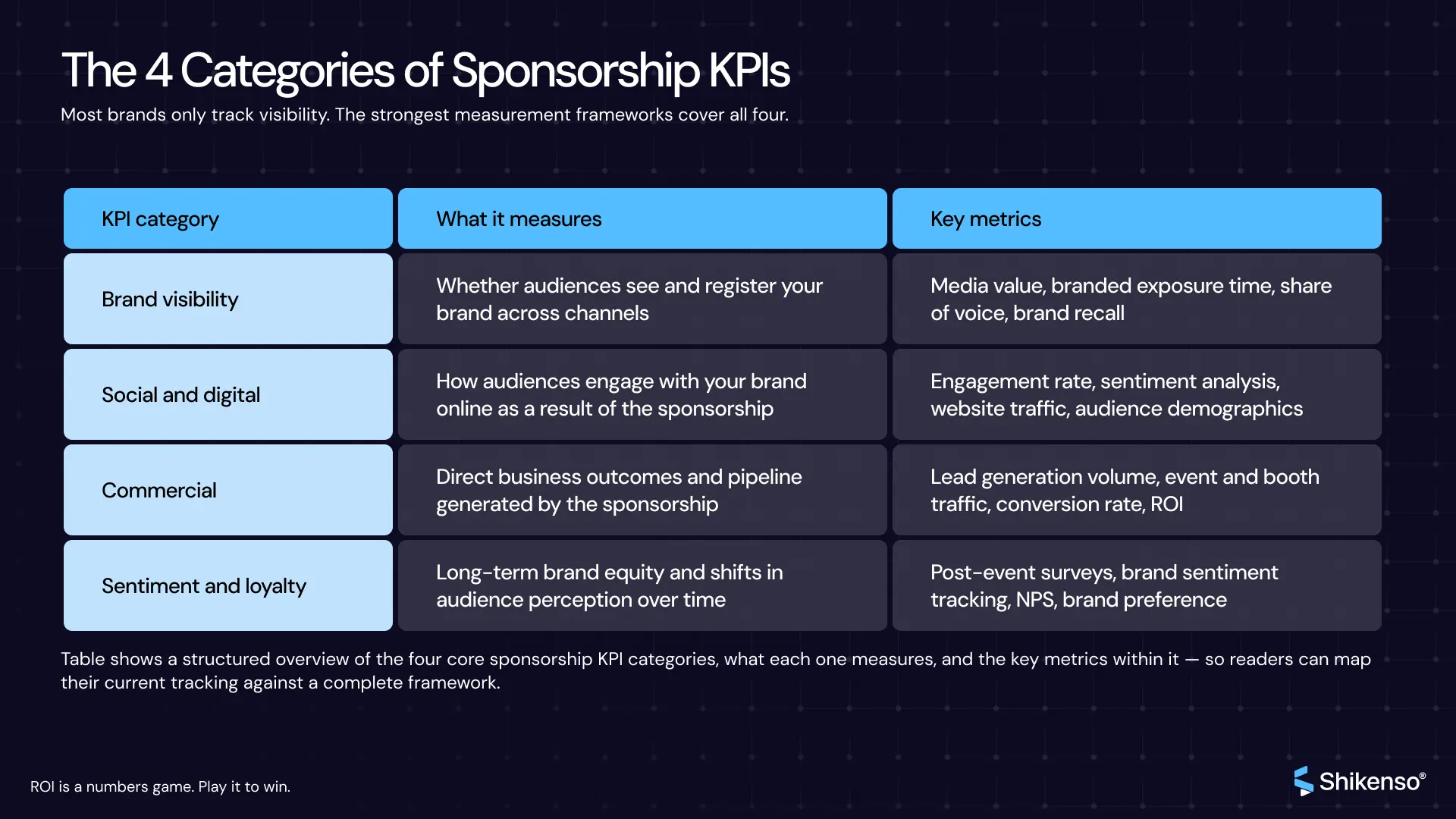
Visibility is where most sponsorship measurement begins, and with good reason. Before a sponsorship can drive commercial outcomes, audiences need to register your brand. These are the core visibility KPIs to track:
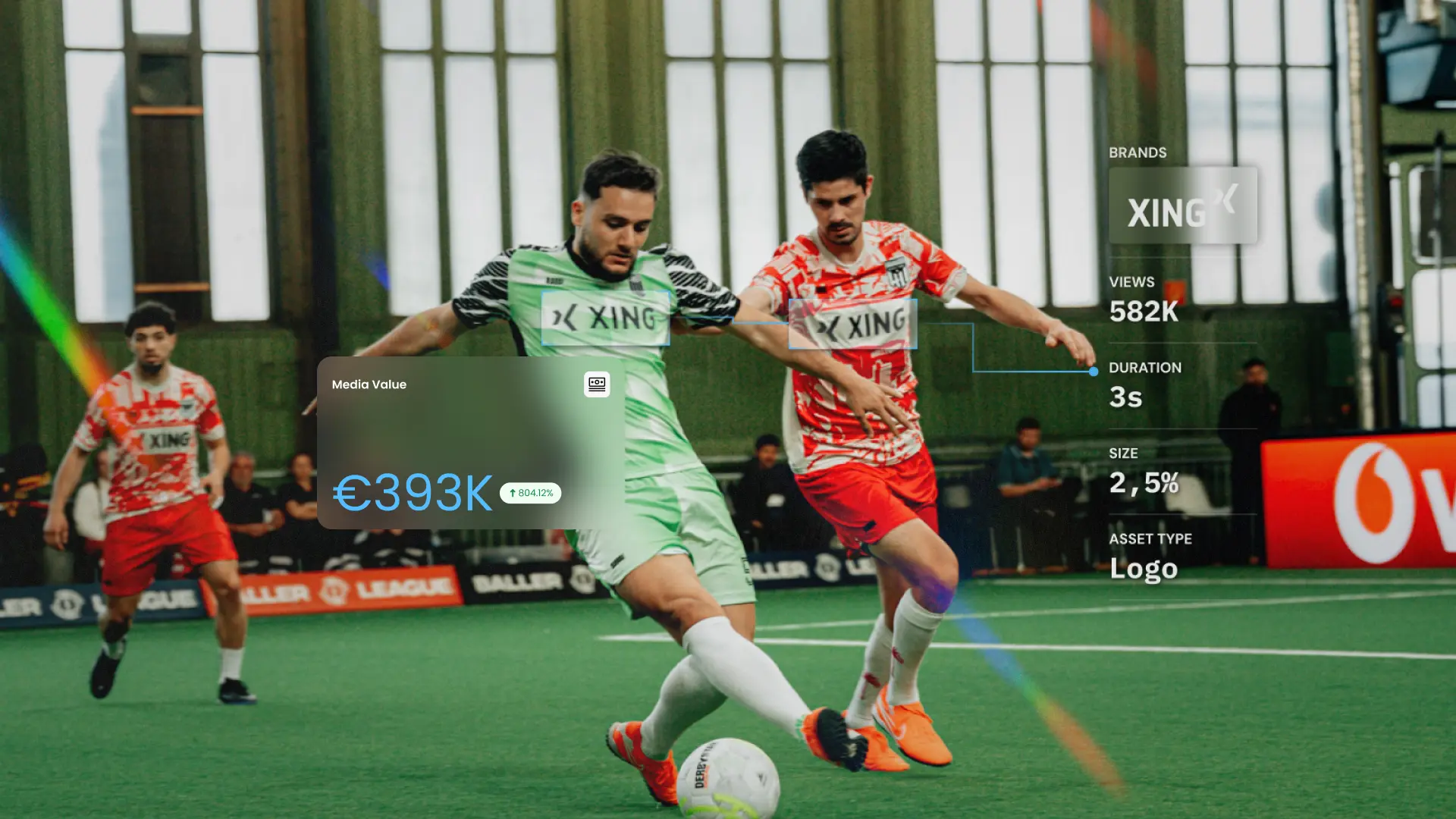
→ Media value: The equivalent advertising cost of brand exposure generated across broadcast, streaming, social, and press. This is your baseline commercial measure of visibility.
→ Branded exposure time and quality: Not just duration, but prominence. A full-screen placement during a major broadcast carries considerably more value than a small background board captured at distance. Quality-adjusted exposure data produces a more accurate valuation.
→ Share of voice: Your brand's proportion of the total conversation around a property or event, relative to other sponsors. Particularly useful when benchmarking against competitors activating in the same space.
→ Brand recall: Measured through post-event surveys, recall data tells you whether audiences actually registered your brand's presence. Exposure without recall is exposure that did not land.
For brands running sports sponsorships, tracking visibility KPIs across broadcast, streaming, social, and print provides a consistent performance baseline and a stronger foundation for renewal conversations.
Social Media, Digital and Audience KPIs
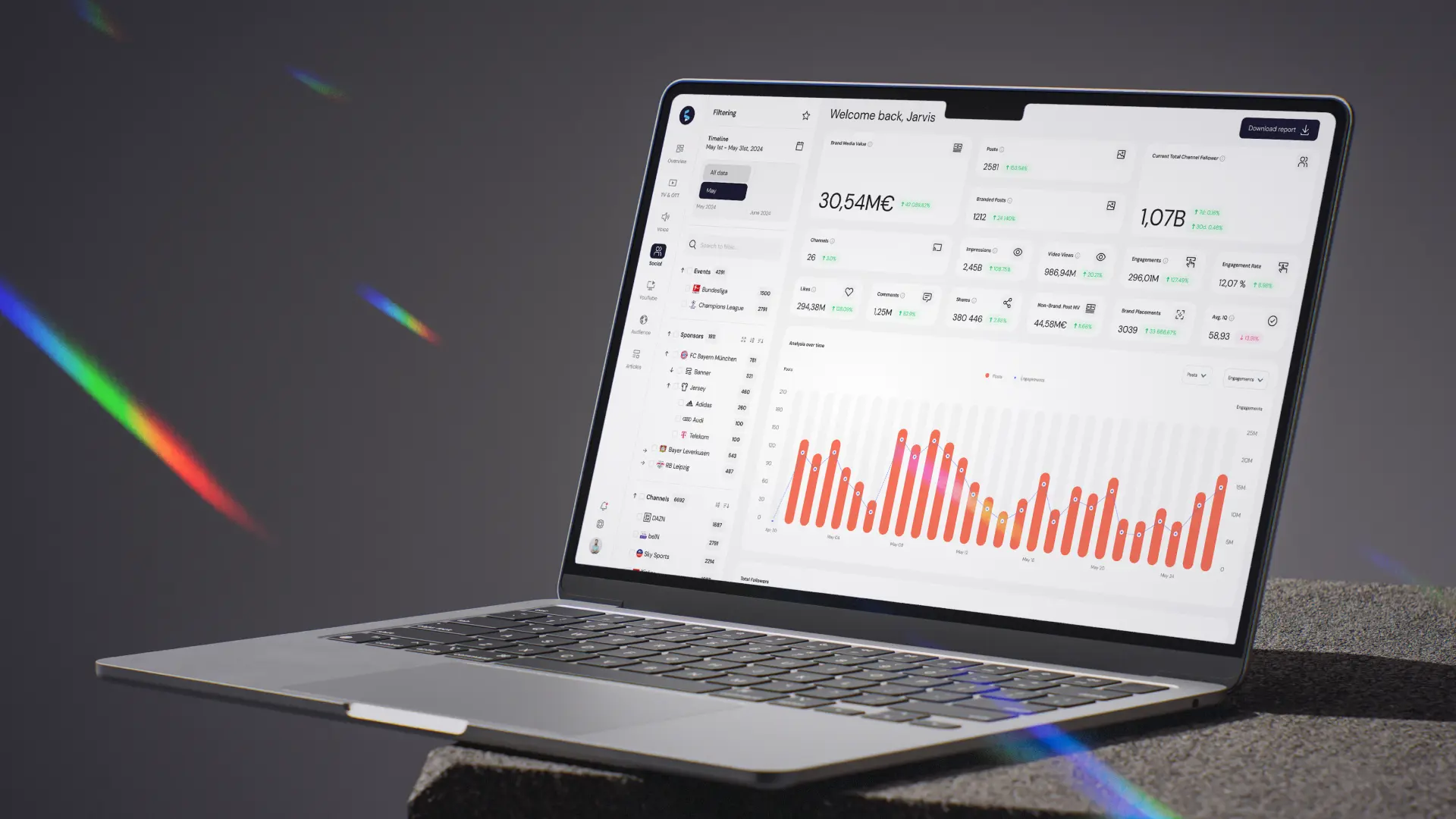
Digital channels sit at the centre of most sponsorship activations today. Measuring them effectively means going beyond follower counts to metrics that reflect genuine engagement.
→ Engagement rate: The proportion of reached users who interacted through likes, comments, shares, or saves. It distinguishes content that resonated from content that was simply served.
→ Sentiment analysis: The tone of brand mentions around a property or campaign. A high volume of mentions is not inherently positive. Sentiment analysis surfaces perception issues early, before they compound.
→ Website traffic from sponsorship sources: UTM-tracked links on campaign content reveal how many people moved from exposure to active interest. Traffic spikes correlated with event windows are a reliable signal of commercial attention.
→ Audience demographics: Who is actually engaging with your content as a result of the sponsorship? Reach into the wrong demographic is still reach in the wrong direction.
Sponsorship activations sit inside that same measurement gap. Closing it means tracking social KPIs against defined targets, not just monitoring volume.
Commercial and Lead Generation KPIs
For B2B brands, or any organisation with a measurable sales cycle, commercial KPIs often determine whether a sponsorship gets renewed or cut. Attribution is the persistent challenge, but these metrics make it tractable:
→ Lead generation volume: The number of qualified contacts generated through sponsorship-linked activities. Unique landing pages and tracked URLs make this attributable rather than estimated.
→ Event and booth traffic: For brands with physical activations at sponsored events, footfall data shows direct audience engagement and, paired with conversion data, produces a tangible commercial number.
→ Conversion rate from sponsorship-sourced leads: Of the leads attributable to sponsorship activity, what proportion converted to a meeting, trial, or sale? Even a directional figure gives finance teams something concrete.
→ Return on investment (ROI): Total commercial value generated against the full cost of the sponsorship. Define the value equation before signing, so there is no ambiguity at reporting time.
Sentiment, Loyalty and Long-Term KPIs
The KPIs brands most consistently undertrack are the ones that reveal long-term impact. Visibility and engagement metrics reflect what happened during an activation. Sentiment and loyalty metrics tell you what is likely to happen next.
Post-event surveys remain one of the most direct tools available. Asking exposed audiences about brand perception, recall, and purchase intent delivers evidence that media monitoring cannot replicate. Running the same survey before and after an activation produces a clean comparison with no guesswork.
Sentiment analysis extends well beyond social platforms. AI-powered tools track brand mentions across broadcast audio, news coverage, and online communities, capturing the full public conversation around a property. GIANTX used this approach to demonstrate the commercial value of their partnerships, bringing 17 new brand partners on board over 21 months.
Customer loyalty indicators such as net promoter score, brand preference tracking, and repeat purchase data move more slowly than engagement metrics, but capture the brand equity sponsorship builds over time. For brands managing multiple partnerships through a dedicated analytics platform for brands, these metrics sit alongside visibility and commercial KPIs in a single view.
Putting It All Together
The brands that get the most from their sponsorship investments are not necessarily spending the most. They are measuring the right things, consistently, across every activation. Visibility, engagement, commercial outcomes, and sentiment: tracked together, these KPIs turn sponsorship from a marketing cost into a business asset that justifies itself at every renewal.
Shikenso tracks media value, audience data, and brand sentiment across sports and esports sponsorships in one platform. Book a demo and we will show you what your current partnerships are actually delivering.

Related reads



Get new insights straight to your inbox
Don’t miss out on the insights that the press and media rave about!