
The 2026 FIFA World Cup spreads across 3 countries, 16 host cities, and 104 matches between 11 June and 19 July.
The venues range from Toronto's 30,000-seat BMO Field to AT&T Stadium in Dallas at 94,000. Each hosts a different share of the tournament schedule, with some running only through the group stage and others carrying through to the semi-finals or the final.
For sponsors at this tournament, those variables are direct inputs in any media value calculation. Stage allocation, match count, and naming rights status together determine the commercial weight of each venue, and this guide covers all 16 across all 3 dimensions.
The 16 Host Venues Across 3 Countries
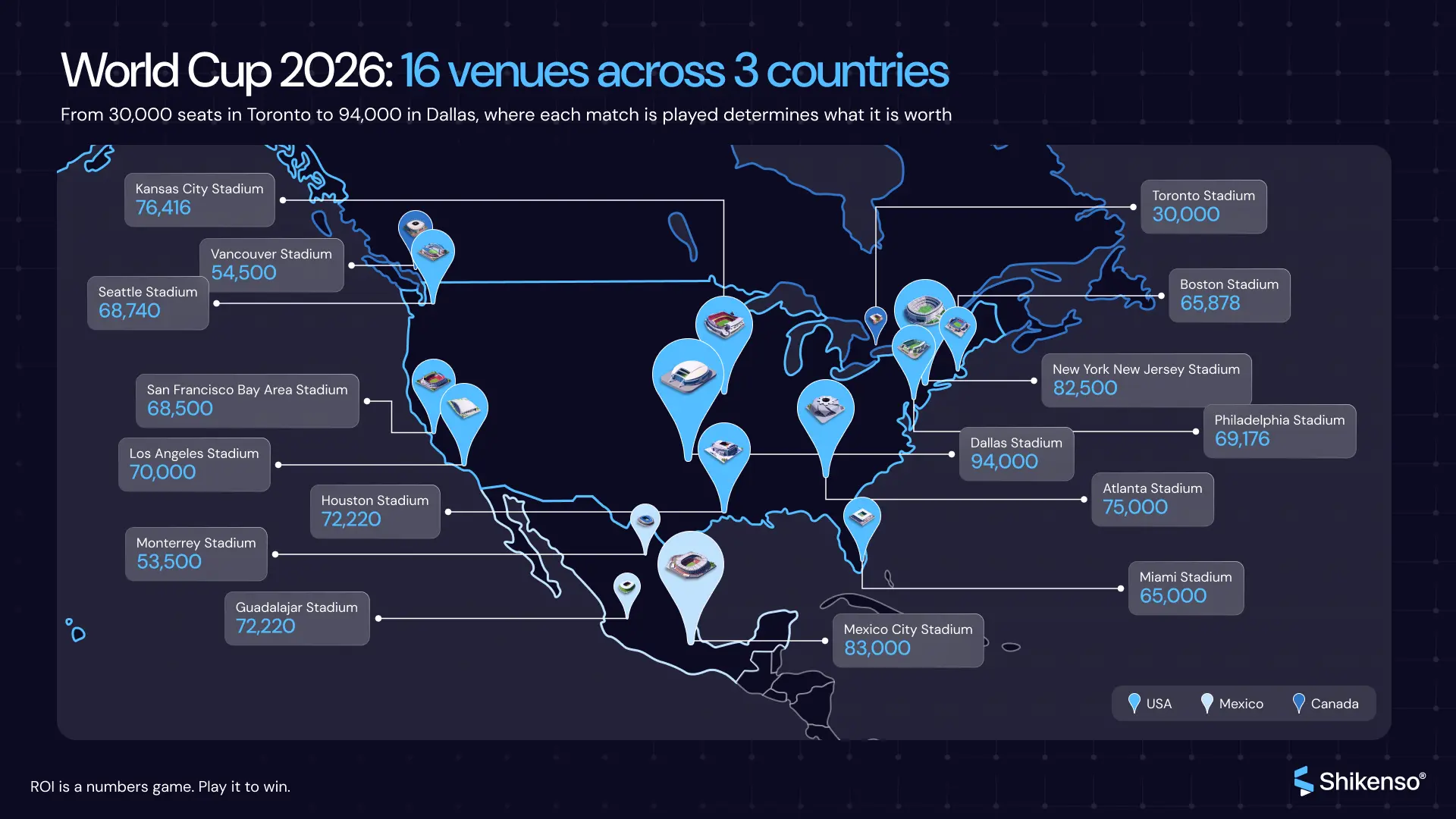
The tournament spans 3 countries and 16 host cities: 11 venues in the USA, 3 in Mexico, and 2 in Canada. The USA carries the full knockout schedule from the quarter-finals onwards, while Mexico and Canada host group stage matches and the early knockout rounds, with their allocations ending at the Round of 16 at the latest.
The 16 venues cover a wide range of stadium types and histories. Estadio Azteca in Mexico City is hosting its third World Cup opening match, a record for any single venue.
Several stadiums are less than a decade old, including SoFi Stadium in Los Angeles (opened 2020) and Mercedes-Benz Stadium in Atlanta (opened 2017), while others are long-established NFL venues hosting football for the first time.
Eight of the 16 venues converted from artificial turf to natural grass ahead of the tournament, as required under FIFA specifications.
The geographic spread also has commercial implications. Venues on the US East Coast, including New York, Philadelphia, and Boston, sit 5 hours behind BST, which means prime-time viewing in Europe falls during afternoon kick-offs in North America.
West Coast venues in Los Angeles and San Francisco are 8 hours behind, shifting European audience windows into late evening. Those time-zone differences affect broadcast audience size at each venue across different markets.
Capacity Rankings: The Biggest and Smallest Venues
Under FIFA's clean venue policy, 15 of the 16 stadiums operate under city-based names for the full 39 days of the tournament, because only official FIFA commercial partners are permitted brand exposure during the competition. BC Place Vancouver Stadium, however, kept its name because it is not named after a corporate sponsor.
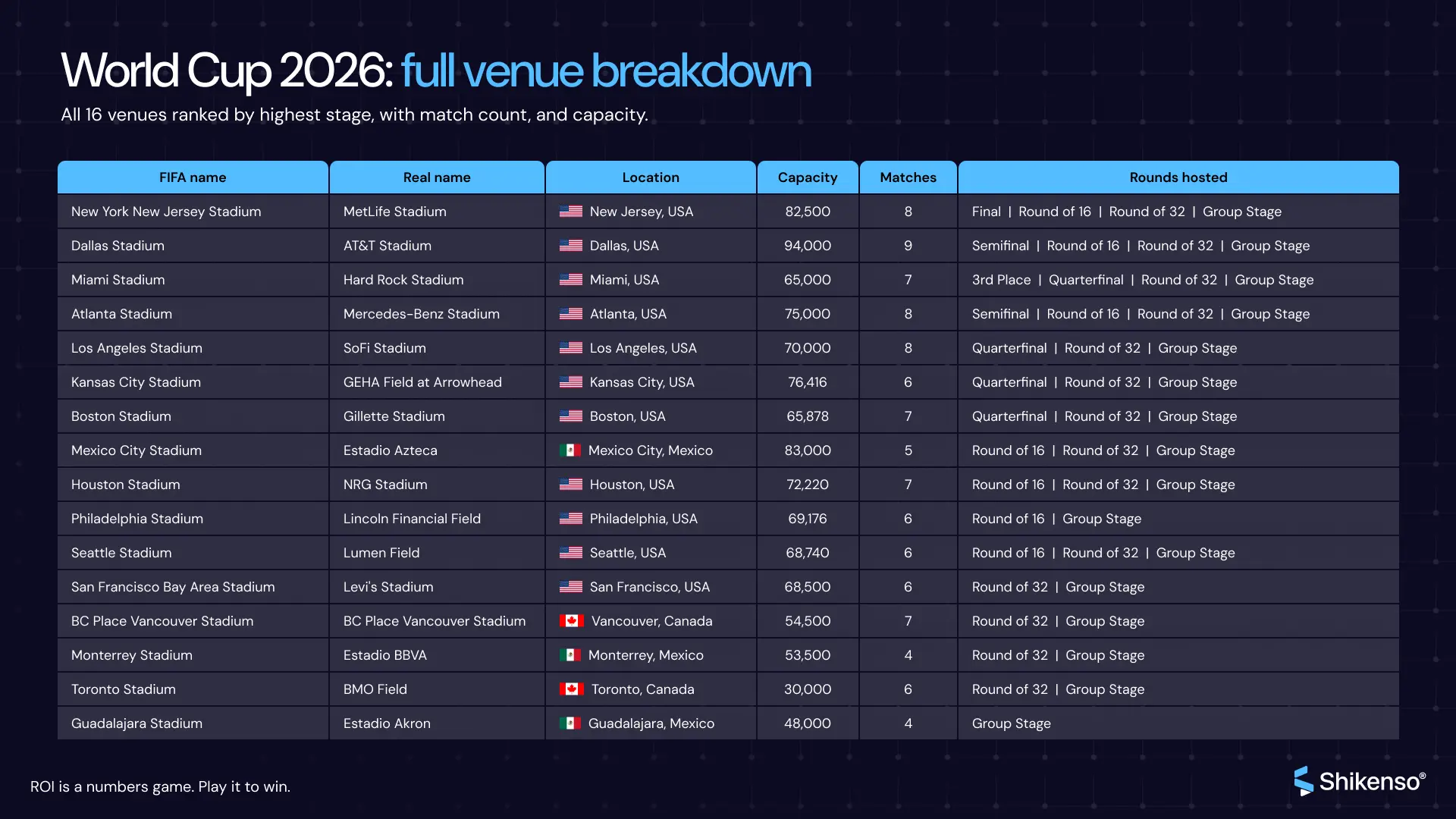
The BMO Field in Toronto holds 30,000, making it the smallest venue by a distance. The 14 other venues sit between 48,000 (Guadalajara) and 83,000 (Estadio Azteca in Mexico City).
Capacity and prestige do not always align. MetLife Stadium holds 82,500 and hosts the final, yet AT&T Stadium is both bigger and allocated more total matches.
Estadio Azteca is the only stadium ever to host 3 World Cup opening matches, though its match allocation ends at the Round of 16. Kansas City's Arrowhead Stadium sits at 76,416 and hosts 6 matches to a quarter-final, yet rarely appears in the headline conversation around tournament venues.
Match Allocation: Why What You Host Matters as Much as How Many Seats
Total matches per venue range from 4 (Guadalajara and Monterrey) to 9 (Dallas). The stage those matches reach matters as much as the volume, because a venue hosting 6 group stage fixtures generates exposure within a regional broadcast window, while a venue hosting 6 matches that run through to the Round of 16 reaches a global audience at every stage of that run.
The 5 venues with the heaviest schedules all reach the knockout rounds: Dallas and Atlanta both host semi-finals, Los Angeles and New York/NJ carry quarter-final and final duties respectively, and Miami hosts both a quarter-final and the third-place match.
Mexico City hosts the opening match and runs to the Round of 16, which carries wider broadcast reach than its 5-match total suggests. Guadalajara and Monterrey each host 4 matches, with Guadalajara limited to the group stage.
The gap between Guadalajara (4 group stage matches) and Dallas (9 matches to the semi-final) goes beyond the numbers, because group-stage-only venues operate in narrower broadcast windows.
Each additional knockout round extends the broadcast reach of every placement inside the building, which is why stage allocation is as commercially relevant as raw capacity when evaluating venue value.
How Shikenso Measure Sponsorship at a Tournament of This Scale
A tournament spread across 16 venues and 3 countries generates brand exposure across dozens of broadcast markets simultaneously. Here is what measurement looks like when applied at that scale.
What Appears on Screen
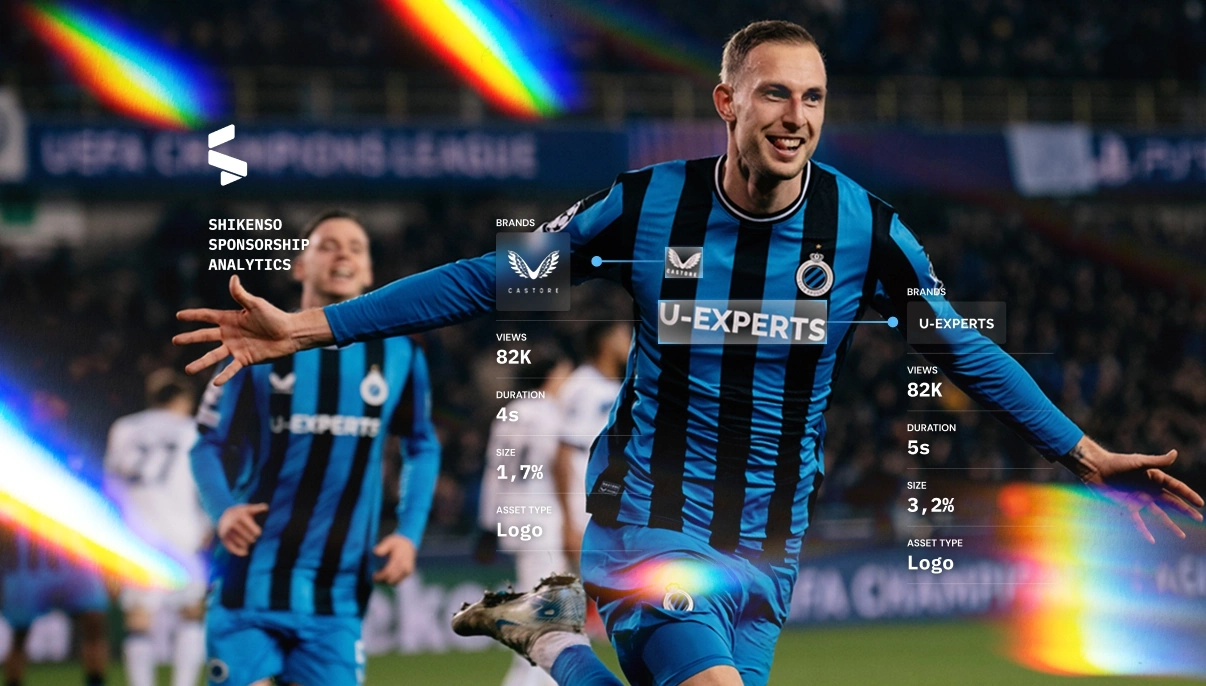
Shikenso tracks every visual brand placement across every broadcast frame: perimeter boards, jersey logos, player boots, pitch-side LEDs, and in-broadcast overlays. Each appearance is logged with its duration, size, and on-screen position, so sponsors can see exactly what ran, in which venue, and during which match.
What Gets Said on Air
Audio detection picks up brand mentions in commentary and broadcast dialogue across 200+ languages. At a tournament broadcast across dozens of markets simultaneously, that layer of exposure would disappear entirely from any report built on visual tracking alone.
Where the Broadcast Goes
Shikenso covers TV, OTT platforms, streaming, and social media simultaneously. A brand appearing in a viral clip from a semi-final would be tracked alongside the main broadcast feed, meaning coverage spans every channel those matches are distributed through, beyond the headline broadcast.
What 16 Stadiums Add Up To
104 matches across 16 venues in 3 countries, with the schedule distributed unevenly from the first fixture. The final lands in New York while the opening match kicks off in Mexico City. Dallas hosts more than twice the matches of Guadalajara.
Capacity, stage allocation, and naming rights status determine the commercial weight of any placement at this tournament. Understanding them before the competition begins is the foundation for everything that follows.
Brands working with Shikenso can see exactly what each venue was worth once the matches are played, rather than estimating after the final. Book a demo to see how we do it:

Related reads

Get new insights straight to your inbox
Don’t miss out on the insights that the press and media rave about!