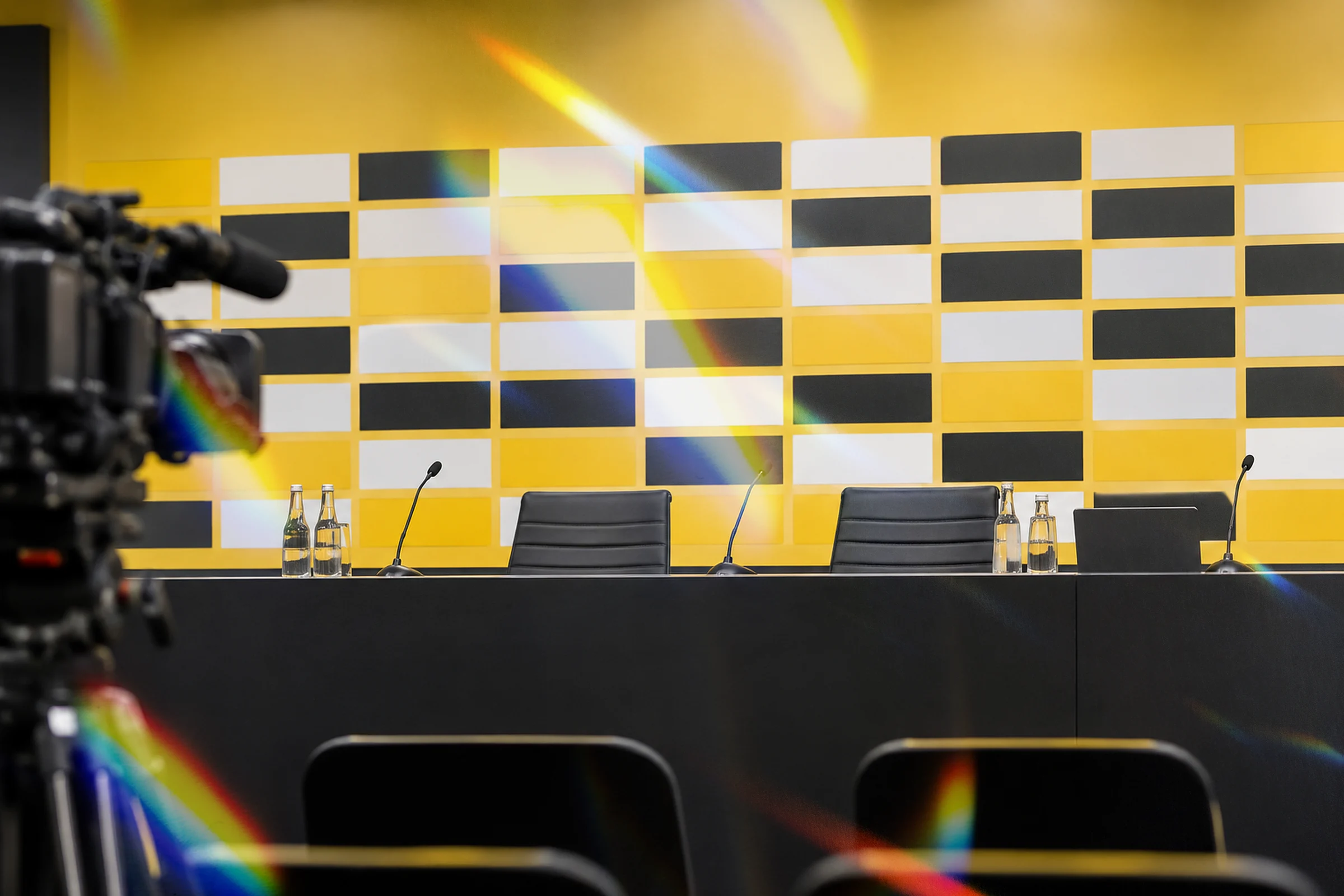

On 30 June 2027, Rheinmetall's logo comes off the LED boards at Signal Iduna Park. Borussia Dortmund and the defence group announced on 13 November 2026 that the BVB Rheinmetall sponsorship will not be renewed after three seasons, following sustained opposition from members and fans.
Most of the coverage has been about politics. The commercial story is just as interesting. One of the most visible partner packages in German football goes back on the market: perimeter boards, press conference backdrops, facade displays and marketing rights at a stadium BVB describes as consistently sold out.
Whoever buys that inventory will be quoted a price. The better question is what it actually delivered.
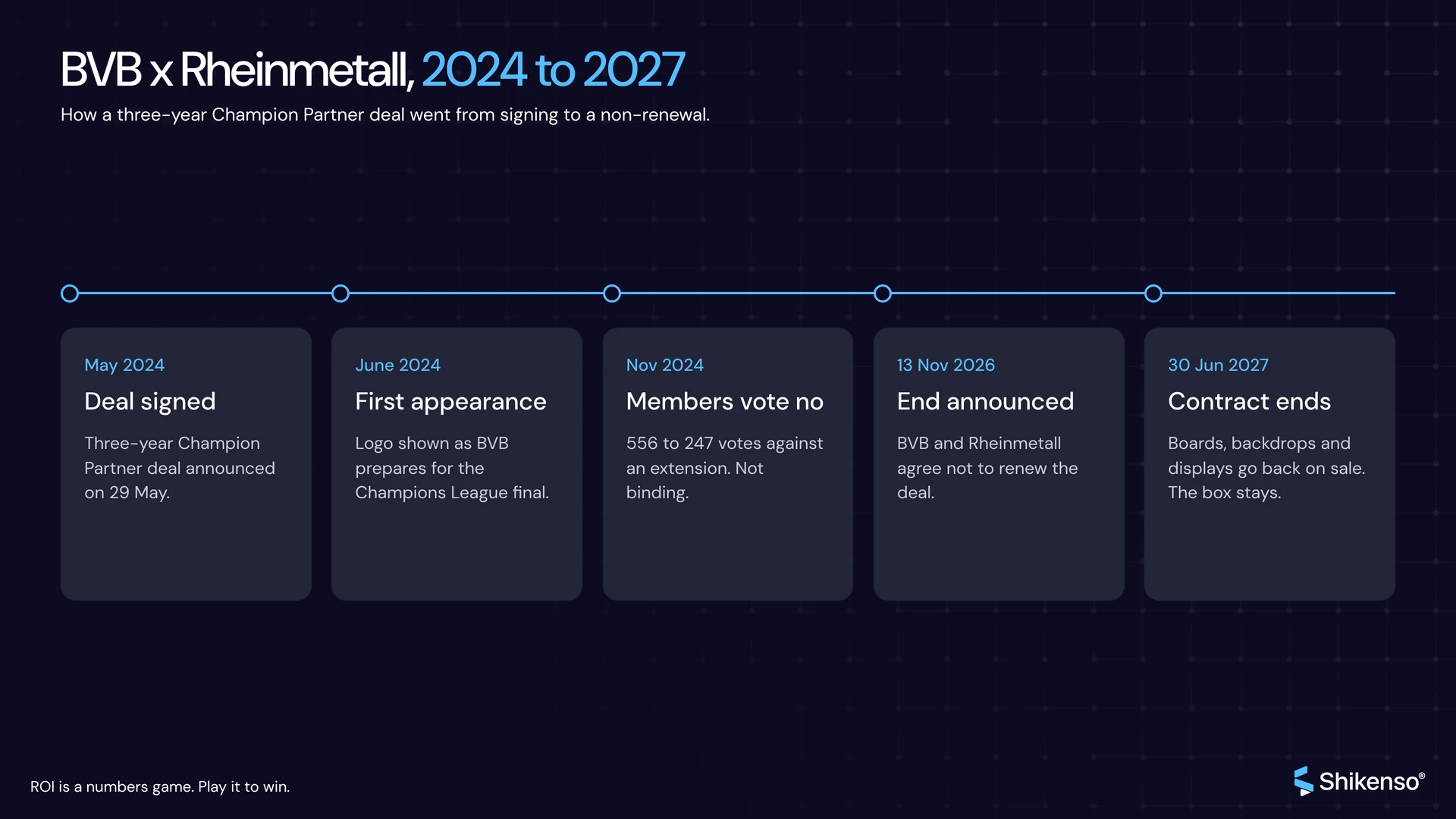
What happened to the BVB Rheinmetall sponsorship?
The BVB Rheinmetall sponsorship is a three-year Champion Partner deal between Borussia Dortmund and Düsseldorf-based defence group Rheinmetall, signed in May 2024. On 13 November 2026, both sides said it ends on 30 June 2027 and won't be renewed. Rheinmetall keeps its box at the stadium.
According to Borussia Dortmund's own interview with both CEOs, the decision was taken jointly. BVB CEO Carsten Cramer said the club took the 2024 members' vote into account, even though he still personally supports the partnership. After June 2027, Rheinmetall will have no advertising boards or branding at the club. The two companies will continue joint social projects.
The members' vote was clear. At the annual general meeting in November 2024, 556 members voted to end the deal and not extend it, 247 voted against and 52 abstained, as Get Football News Germany reported. The motion wasn't binding on management. Two years later, it decided the outcome.
What was in the Rheinmetall package at BVB?
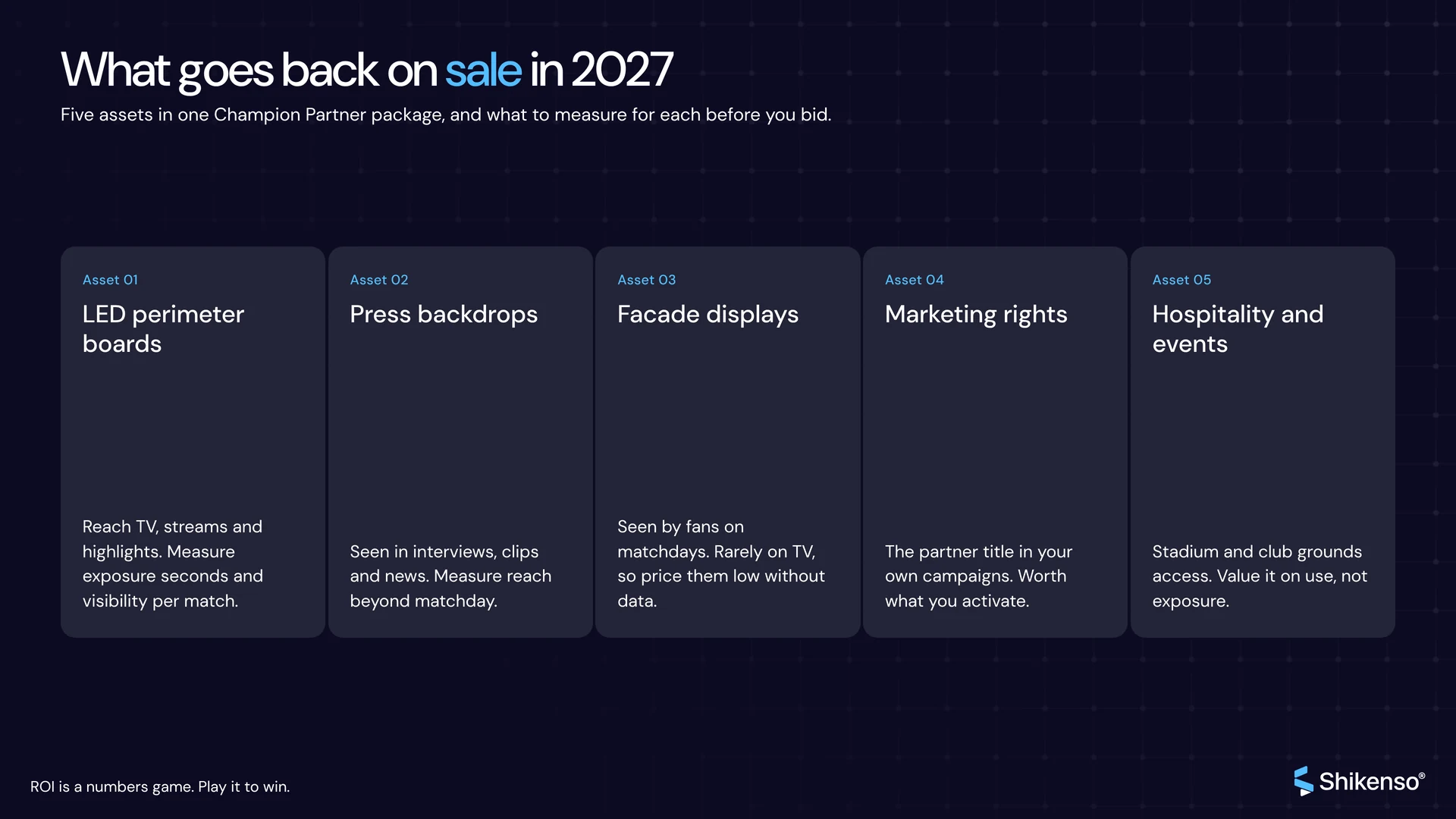
The Rheinmetall package at BVB combined high-reach advertising space, marketing rights and hospitality. Rheinmetall's May 2024 announcement lists perimeter advertising, backdrops at press conferences, displays on the stadium facade, and event and hospitality offers in the stadium and on the club grounds.
Champion Partner is a tier below the shirt in BVB's partner structure. The dpa-AFX report on the signing, carried by Börse Express, described it as one of the club's most important sponsor categories financially. No front-of-shirt slot was involved.
That matters for anyone thinking about the inventory. Five very different assets are in the bundle:
- LED perimeter boards: the asset that reaches TV, streams and highlights, and the one fans noticed most.
- Press conference backdrops: seen in interviews, clips and news coverage, often long after the match.
- Stadium facade displays: seen by fans on matchdays and in arrival shots, rarely by broadcast audiences.
- Marketing rights: the right to use the partner title in your own campaigns.
- Hospitality and events: matchday and non-matchday access in the stadium and on the club grounds.
Each asset reaches a different audience, through different channels, at a different cost per contact. Bundled into one fee, nobody can see which part did the work. Our guide on how football advertising boards work explains why the boards alone vary so much in value.
How much is the BVB Rheinmetall sponsorship worth?
No official figure exists. Reports range from a single-digit million euro amount per year, cited from Handelsblatt in the dpa-AFX report at signing, to around €10 million a year, the figure ZDFheute cited from media reports in November 2026. Neither club nor sponsor has confirmed an amount.
For context, BVB reported €170.3 million in sponsorship and hospitality revenue for 2025/26 at its financial results press conference, with Vodafone, Polestar and Lenovo as new partners. Across the league, Bundesliga clubs earned €1.15 billion from advertising in 2024/25, about 22% of total revenue, according to the DFL's economic report.
Cramer didn't play the loss down. "The income from the sponsorship contract will be missing from summer 2027, that's a fact," he said (our translation), as quoted by bvbwld, adding that it reduces the club's financial room and planned investments have to be reprioritised. So BVB has a strong reason to resell the inventory quickly and at a high price.
Why the next sponsor should price the package asset by asset
A Bundesliga sponsorship package valuation should start from what each asset delivered, not from what the bundle cost last time. The outgoing deal is the best benchmark you will ever get: three full seasons of the same boards, backdrops and displays at the same home matches.
Here is our position: a brand that buys the former Rheinmetall package as one bundle at the old price is probably overpaying for some assets and underpaying for others. It just won't know which.
We call the alternative the asset-by-asset re-pricing method. It has four steps:
- Split the bundle. List every asset separately: board minutes per match, backdrop appearances, facade slots, rights, hospitality.
- Measure what each asset delivered. Exposure seconds, visibility and reach across TV, streams, highlights, social and news, per match and per season.
- Convert exposure into media value. Use an explainable media value method per asset, with your own audience weighting, so finance can follow the maths.
- Re-bundle on your terms. Keep the assets that reach your audience. Drop or trade the rest, and tie part of the fee to an exposure floor.
The order matters. Brands that start with the club's asking price end up negotiating discounts. Brands that start with measured delivery end up negotiating value.
Shikenso measures sponsor exposure independently of the rights holder, with logo detection across broadcast, streams, social and online media, and media value broken down by asset. That is the evidence a brand needs before it sits down with the seller.
How clubs should resell freed sponsorship inventory
Clubs should resell freed sponsorship inventory with the outgoing partner's delivery data in hand. A sales deck that shows what the boards, backdrops and facade delivered over three seasons is far more convincing than a rate card.
In BVB's case, the seller is already fixed. Agency Sportfive acquires and manages sponsors for the club and markets its hospitality, and Sportcal reported on 5 November 2026 that the mandate now runs until June 2034. For rights holders in a similar spot, three moves make the inventory easier to sell:
- Package by audience, not by history. The old bundle fitted one buyer. The next buyer may only want the boards, or the boards plus hospitality.
- Show delivery per asset and per match type. A Saturday evening top match reaches a different audience than a Friday night fixture. Price them separately.
- Offer a renewal report from day one. Our guide on building a sponsorship report that gets renewals signed shows what a new partner will expect to see.
Values risk is now part of sponsorship package valuation
Values risk is the chance that fans, members or the public reject a partnership, and it now belongs in every Bundesliga sponsorship package valuation. The Rheinmetall deal shows it can end a contract that both companies still supported.
German football has an unusual governance structure. Members hold real influence, and a vote at an annual general meeting can turn into a business decision, even when it's formally non-binding. BVB president Hans-Joachim Watzke, who pushed the deal through as CEO in 2024, said in November 2026 that it had "cost the club strength" (our translation), as ZDFheute reported.
For brands, values risk cuts both ways. A brand with a clean fit to the club's fan culture may be worth more to the seller than a higher bid from a contested category. For clubs, the lesson is to test controversial categories with members before signing, not after. And both sides should write it into the contract:
- an early-exit or review clause tied to a members' vote or a defined reputational event
- a sentiment and coverage baseline measured in the first season
- agreed communication rules if fans protest in the stadium
Our view: three predictions for the package
The Rheinmetall package will be sold, and probably faster than the politics suggest. Here is what we expect.
- The bundle gets split. Boards and backdrops go to one partner, hospitality and rights to another. Two or three smaller deals are easier to close than one Champion Partner deal of the same size.
- Delivery data becomes part of the pitch. Buyers will ask what the old boards delivered per match and per season, and sellers who can answer will close first.
- Values clauses spread. After BVB, more German clubs will add members and reputation triggers to partner contracts, and brands will ask for them too.
The Bottom Line
The BVB Rheinmetall sponsorship ends because members said no, not because the inventory failed. From July 2027, boards, backdrops, facade displays and rights at Signal Iduna Park are available again. Brands that measure what each asset delivered will pay the right price, and clubs that show that delivery will sell faster. Before you bid on any freed package, start with a package audit built on measured exposure.

Related reads


Get new insights straight to your inbox
Don’t miss out on the insights that the press and media rave about!