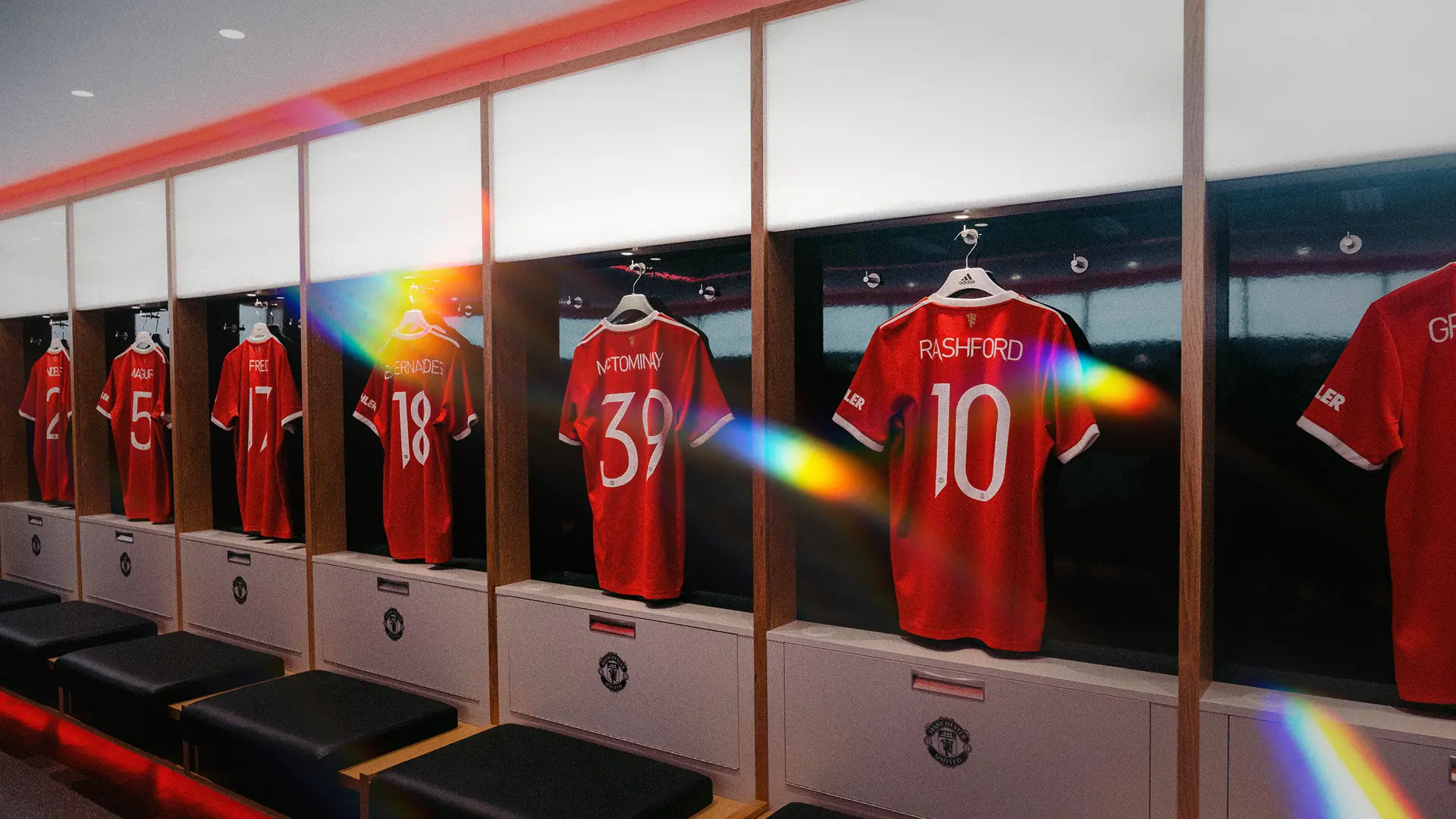

For the first time in over a decade, no Premier League club will carry a betting brand across the front of its match shirt this season. The category that once filled more chests than any other has been legislated off the most valuable piece of real estate in the league.
The brands taking its place point to where football's commercial money is heading.
Finance, air travel and technology brands have moved into the space, while a handful of clubs have started the season with nothing on the front at all. For anyone who values sponsorship by the attention it earns, the 2026/27 shirt is a live case study in how quickly a single category can reshape a league.
What the betting ban actually changed
The clubs agreed to remove gambling brands from the front of the shirt back in 2023, and the rule took full effect this season. It is a targeted restriction, not a full exit. Sleeve placements, training kit and pitchside branding all remain open to betting operators, so the change hits one piece of the kit rather than the whole partnership.
The rule followed years of pressure over gambling's visibility in football, and the clubs chose a voluntary move before regulation forced one. Front-of-shirt was the obvious target. It is the placement broadcasters frame most often, which made it both the most valuable slot for operators and the clearest symbol of how far the sport had come to rely on their money.
The scale is easy to underestimate. In 2025/26, betting brands were the front-of-shirt sponsor at 11 of the 20 clubs, more than any other single category. This season that number is zero.
The pressure did not fall evenly. The biggest deals at Arsenal, Liverpool, Manchester City and Manchester United were already tied to airlines, banks and technology brands, so those clubs barely felt the rule. It landed hardest on the mid-table and promoted sides that had come to depend on gambling money, some of it signed at inflated values.
Seen season by season, the rise and fall of betting on the shirt is stark.
Who is on the front of Premier League shirts in 2026/27
Finance is now the single largest category on the shirt, followed by airlines. The remaining slots are spread across technology, insurance, telecoms, food and beverage, human resources, software and tourism, a wider industry mix than the league has carried in years.
The marquee deals set the tone. Emirates stays at Arsenal, Etihad Airways at Manchester City, Standard Chartered at Liverpool and Snapdragon at Manchester United. Below them, financial brands have filled several of the vacated slots, with trading platform CMC Markets among the category's new arrivals.
For promoted clubs the timing is harder. They arrive with smaller commercial teams and less negotiating history, and several are still working through offers as the season gets under way. A blank shirt front on opening weekend is not a look any club wants, but it is the direct cost of losing a category that paid well and paid quickly.
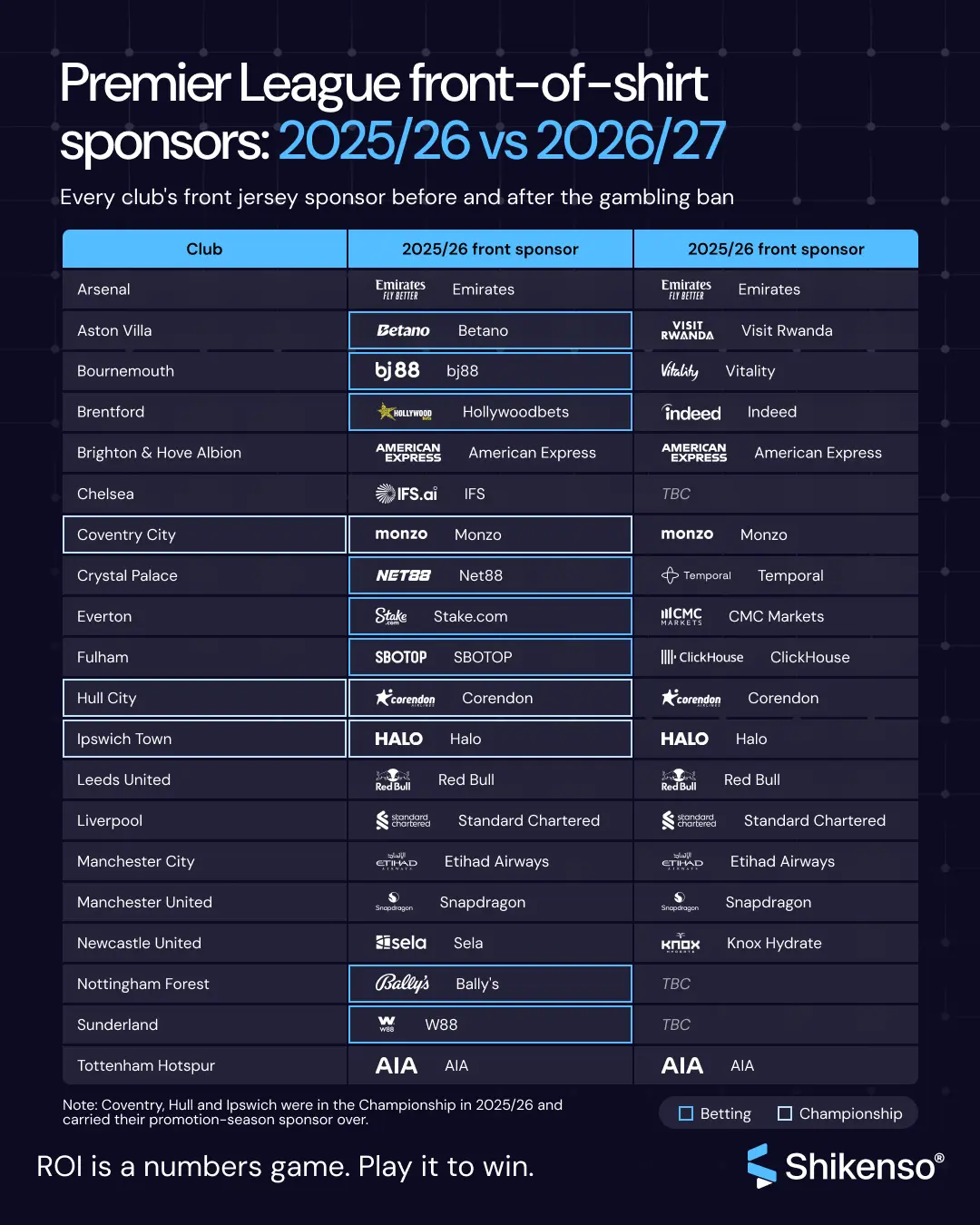
Grouped by category, the change is easy to see:
Not every club has landed a replacement. Chelsea, Nottingham Forest and Sunderland opened the season without a front-of-shirt partner, a reminder that the shirt is only worth what a brand will pay to sit on it.
Where the betting brands went
Betting operators did not disappear from the Premier League. The ban covers the front of the shirt only, so they moved to the placements still open to them and kept their logos in broadcast shot.
Betano is the clearest example. It picked up the Aston Villa sleeve and became Tottenham's training wear sponsor inside the same window, buying visibility across matchday and content without touching the front of the shirt. For the analytics side of the business, the interesting question is how that exposure compares with what these brands gave up.
A sleeve is not a like-for-like swap for the front. It carries less of the broadcast frame, reads smaller on camera and competes with the kit maker's logo for attention. What it offers betting brands is continuity, a way to stay present in the competition while the front-of-shirt door stays shut.
Here is where betting can and cannot appear this season.
The same shift from one exposure profile to another is worth watching on a far bigger stage.
What the category swap means for brand visibility
A swap of categories is also a swap of exposure profiles. Replacement deals are generally smaller than the gambling contracts they follow, with several new front-of-shirt agreements reported in the region of €5M a year against the higher figures some clubs banked before.
Across the league, clubs are working to close a shortfall estimated in the tens of millions. For the incoming sponsors the fee is only half the picture. What matters is the return that fee earns in screen time, reach and audience response over a full season. Measured properly, a smaller fee on a well-framed shirt can outperform a larger one that rarely reaches camera, and that is the calculation clubs and brands are running for the first time in years.
The front of the shirt is where that return is decided. It is the most-filmed placement on the kit, and a finance or airline brand arriving for the first time needs to know how often it appears, in what context and to whom. That is the same problem every football sponsor faces when proving a deal was worth the money, and it does not answer itself.
The good news is you do not have to guess at it. We can show you exactly what a shirt placement returns across a full season, in the exposure and reach that justify the fee.
How to measure the shirt you paid for
For a brand signing its first Premier League shirt deal, the badge is the easy part. Proving what it delivers is the work, and broadcast exposure, social pickup and audience sentiment never show up on the contract. This is what our platform was built to solve.
Just like Club Brugge, who turn shirt and pitchside exposure into media value their sponsors can act on, incoming partners can see what a placement returns instead of guessing, and understand what they are actually buying.
It is worth watching betting brands on their new placements too, since how audiences respond to a gambling logo is a separate question from how often it appears, one many operators are only starting to track properly.
The ban has handed a third of the league fresh sponsors and fresh questions, and the brands that measure the answer are the ones that renew with confidence. If you are weighing a Premier League placement, we can show you what it is worth in practice.

Related reads

Get new insights straight to your inbox
Don’t miss out on the insights that the press and media rave about!