
For many German marketing departments, 2027 planning starts now, and the market has moved a lot this year. A video game deal reportedly worth around €250 million. A kit supplier that lends a league €100 million. A tech company that brings its AI search into a national team partnership.
Each of these German sponsorship deals says something about what rights holders will offer next year, what they will ask for, and what a brand should insist on in return.
Here are the eight deals from 2026 we think every German brand sponsorship team should know, and the one lesson each one holds for 2027.
How we picked these German sponsorship deals
The eight German sponsorship deals below were announced between April and November 2026 and involve German leagues, federations or clubs. We chose deals that change how sponsorship is bought or measured, not just the biggest names. Each entry gives the facts as announced, then the lesson for brands.
The list updates our earlier look at trends among Bundesliga sponsors with this year's deals.
League and federation deals
League and federation deals set the frame for everything else: they decide which digital, financial and media rights exist and how long they are locked up.
1. Bundesliga and EA Sports: seven more years
The Bundesliga and Electronic Arts extended their partnership, which dates back to 1998, by seven years, according to Sport1 on 27 August 2026. The Bundesliga and 2. Bundesliga stay in EA SPORTS FC, with a focus on digital offerings and new technologies. Bild reported a total value of around €250 million, which the parties have not confirmed.
The lesson: in-game and digital inventory is now core sponsorship inventory. If your deal includes virtual boards or game integrations, ask how that exposure is measured before you pay for it.
2. DFL and adidas: a partner that also lends money
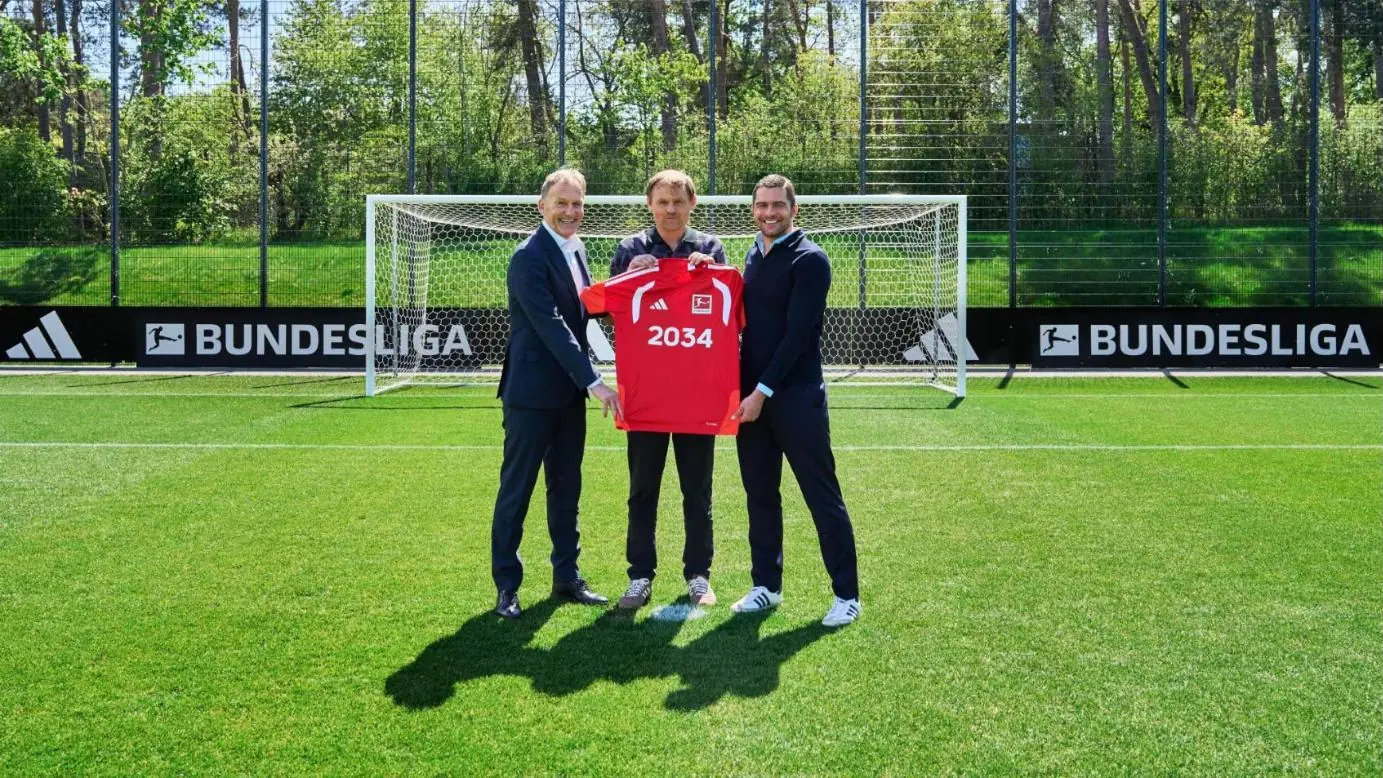
adidas became "Official Future Partner of the Bundesliga" in April 2026. As Bundesliga.com reported, the deal combines a €100 million loan facility "on partnership terms" with the official match ball until at least 2034.
The lesson: deals increasingly mix financing with rights. When a package bundles both, value the media part on its own, so you know what you pay for visibility and what for the relationship.
3. Google and the DFB: AI search as a sponsorship asset
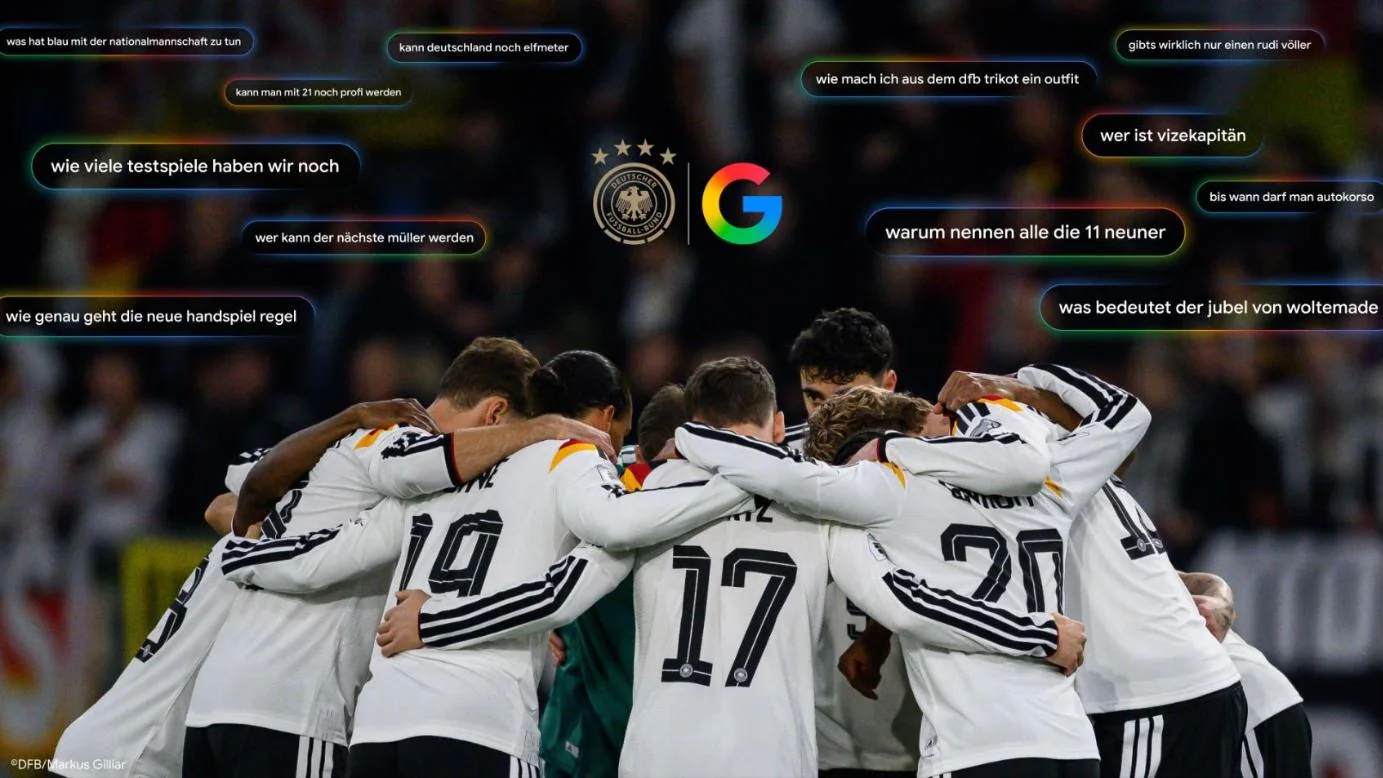
Google became a partner of the men's national team in April 2026, adding to its Google Pixel deals with the women's team and the Frauen-Bundesliga. The DFB named the AI Mode in Google Search as a way to develop the fan experience, and said searches about the team nearly doubled (up 90%) in the previous month.
The lesson: activation is moving into search and AI answers. Track where your brand shows up around a partnership, not only where the logo appears on screen.
4. Opel and the HBL: one title, every club
Opel took the naming rights to the league as the "Opel Handball-Bundesliga" for three seasons and became partner of both national handball teams from 1 July 2026. According to SPORTFIVE, which brokered the deal, the Opel wordmark appears on the jerseys of all HBL teams and the national teams, with a focus on younger, digital audiences.
The lesson: title sponsorship spreads exposure across every club's broadcasts, highlights and social channels. Measuring it means tracking the whole league, which is where logo detection earns its keep.
Club partnerships
Club partnerships show how brands are committing in 2026: some for one more season, some until 2030, and some through an agency that holds the rights until 2034.
5. heise and Hannover 96: three more years, regardless of league
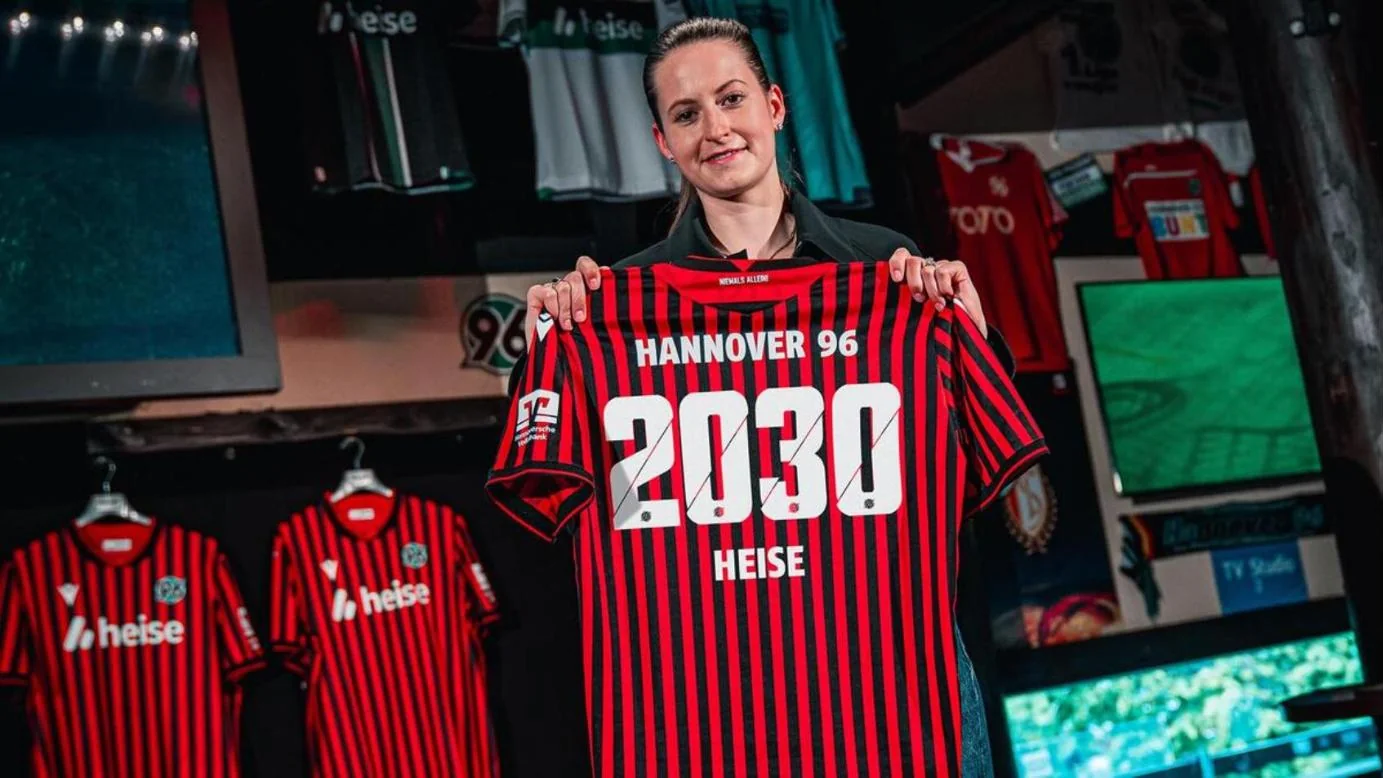
The heise group extended its shirt sponsorship at Hannover 96 by three years, up to and including 2029/30, decided early and independently of the club's league status. heise's Head of Brand & Culture said the company can "feel" that the commitment is working.
The lesson: long, early commitments are a strong signal, but a feeling isn't a baseline. Measure the first season properly, so the case for year five is as clear as the case for year one.
6. NRG24 and Bayer 04: the official partner package
Energy provider NRG24 extended its partnership with Bayer 04 Leverkusen until 30 June 2027. The package includes LED appearances in the upper tier during Bundesliga home games, stadium signage, a box for home matches and three VIP seats at European away games.
The lesson: most Bundesliga sponsors aren't shirt sponsors but official partners with a mix of assets. Value each element separately; our guide to how football advertising boards work covers the LED part.
7. Eurowings and Borussia Dortmund: one more year
Eurowings extended its partnership with Borussia Dortmund by one more season, its tenth year with the club, as pr-agent reported on 27 October 2026. The partnership with BVB's women's team, in place since 2022, continues as well.
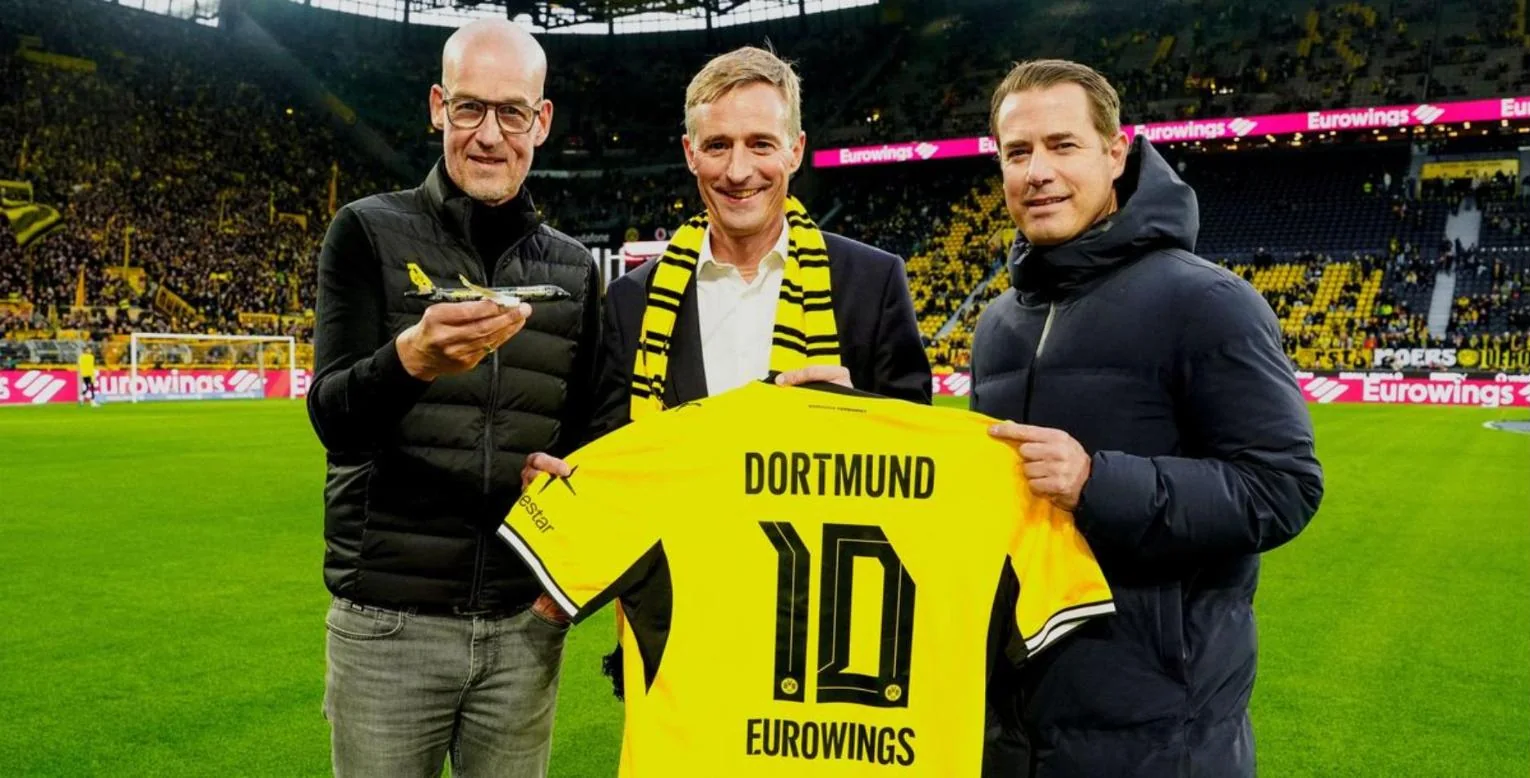
The lesson: a one-year extension is an evaluation window. Decide now which numbers will settle the next renewal, and start collecting them from the first match.
8. Sportfive and Borussia Dortmund: the seller is fixed until 2034
BVB extended its marketing partnership with agency Sportfive early, adding three years to run until 2034, according to Sportcal. Sportfive acquires and manages sponsors and partners for the club and markets its hospitality at Signal Iduna Park.
The lesson: many German deals are sold by agencies with long mandates. Brands negotiating with those clubs will meet the same seller for years, which makes independent data on what the inventory delivers more valuable.
What do these German sponsorship deals have in common?
The eight German sponsorship deals have one thing in common: none of the announcements says how success will be measured. They describe rights, durations and ambitions such as awareness, digital reach and fan experience, but no KPIs.
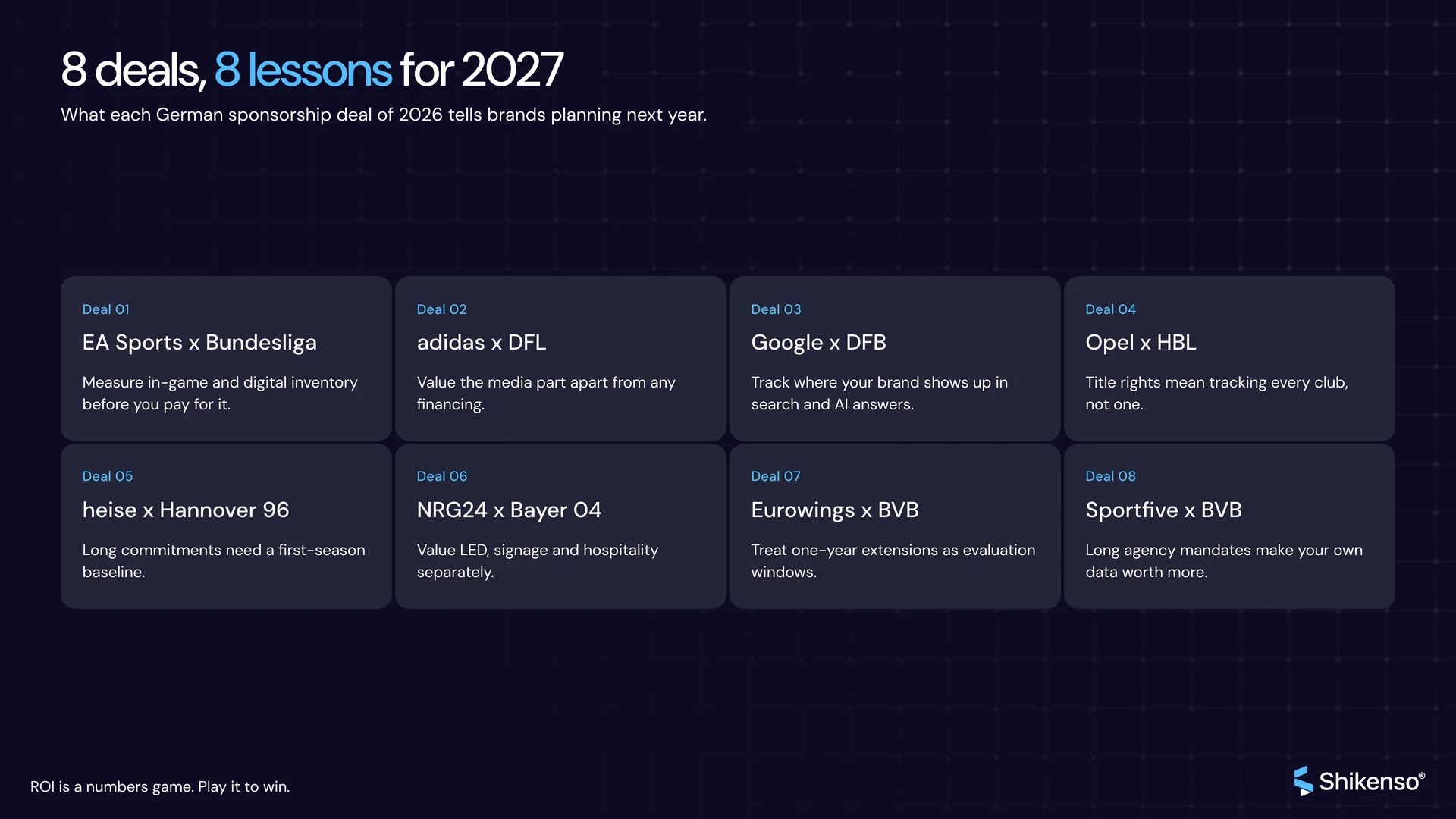
Three patterns stand out. Deals now combine media rights with digital products, financing or AI search. Durations vary from one season to 2034. And more inventory sits outside the stadium, in games, search results and social feeds, where classic recaps don't look.
The industry itself wants more visibility for sponsorship. Michael Steinhauser, who becomes managing director of the VSA, the association of German sponsorship providers, on 1 January 2027, told HORIZONT he wants more public and political visibility for sports sponsorship. Measurable results make that case easier.
The open slot to watch: Gladbach's shirt
Borussia Mönchengladbach's shirt is the most visible opening for 2027. Reuter ends its front-of-shirt sponsorship at the end of the 2026/27 season after three years as main sponsor, and stays on as a co-sponsor.
For a brand considering the slot, the outgoing deal is the best data set available: three seasons of broadcast, highlights and social exposure to set a price against. Our guide on how to value a Bundesliga shirt sponsorship uses the Gladbach slot as its example.
What should brands do before 2027 planning?
Brands should go into 2027 planning with their own evidence, not the rights holder's recap. Four steps cover most of it.
- List every asset you hold, including digital, in-game and hospitality elements, with the contract end date.
- Measure what each asset delivered in 2026, per channel, in quality-weighted exposure and cost per impression.
- Flag the evaluation windows, such as one-year extensions, and agree the numbers that will decide them.
- Write KPIs and data access into new contracts. Our sponsorship ROI framework shows which results to ask for.
Shikenso measures exposure across TV, streams, social and online media for every asset in a deal, so each one can be compared on the same scale.
The Bottom Line
2026 brought longer deals, bigger digital components and more ways to pay for a partnership, but no new standard for proving that it works. That standard is up to the brands. Go into 2027 with the numbers for every deal you hold, and benchmark your deals before the next renewal.

Related reads


Get new insights straight to your inbox
Don’t miss out on the insights that the press and media rave about!